By Purest Water Solutions Team | Last Updated: August 21, 2026
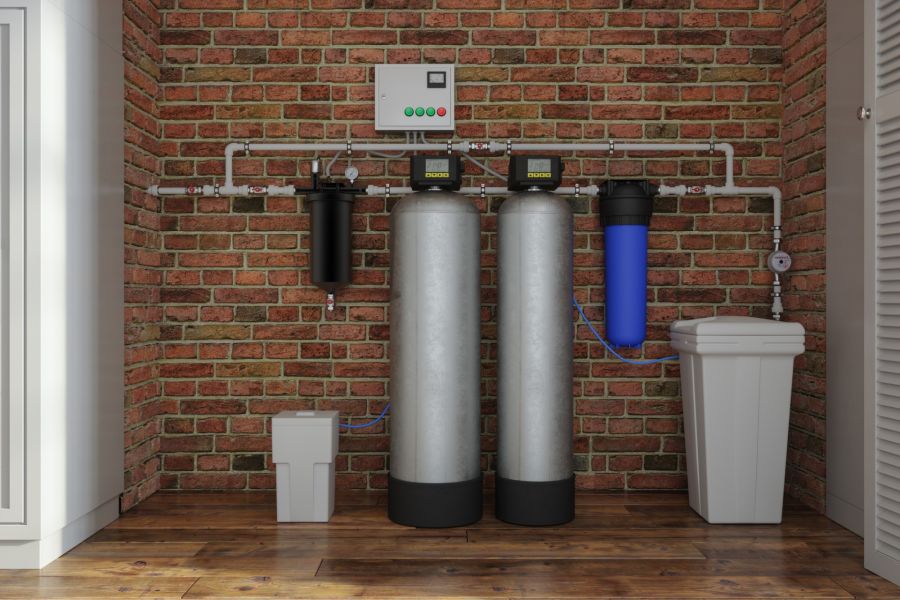
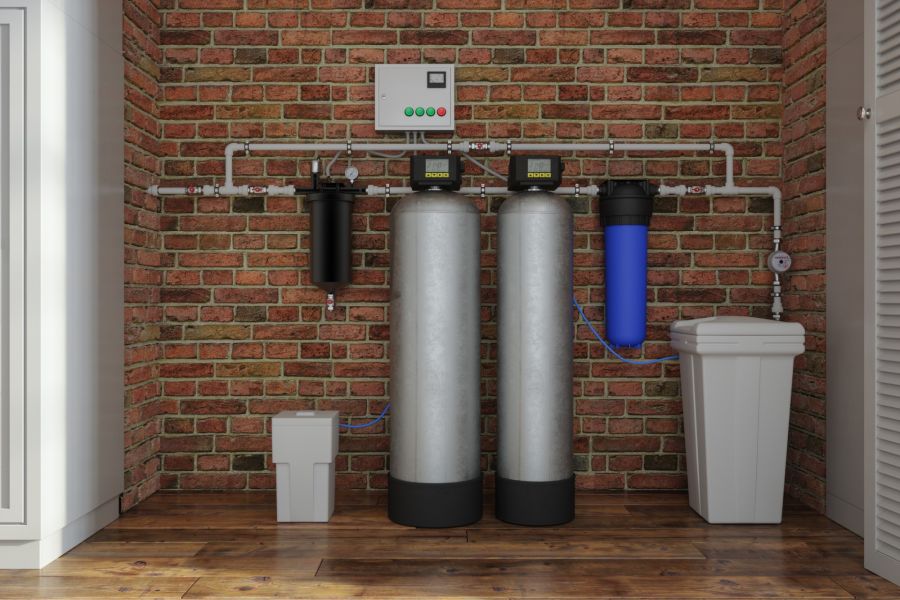
Commercial operations in Gilbert, Peoria, Chandler, and Mesa draw water that consistently tests in the very hard range, with averages from roughly 12 to 17 grains per gallon depending on the city and the daily blend of Central Arizona Project surface water and local groundwater, according to individual city Consumer Confidence Reports published under the Safe Drinking Water Act. Reported total dissolved solids reach approximately 795 mg/L in Gilbert, and the City of Mesa's 2025 report lists a range of 190 to 970 mg/L. At those mineral concentrations, commercial ice machines, espresso equipment, steam ovens, medical autoclaves, and car wash reclaim systems accumulate scale within 12 to 24 months of unprotected operation. A commercial reverse osmosis system removes 92 to 99 percent of dissolved solids at the point of use, meeting NSF/ANSI Standard 58 purity requirements and protecting equipment from accelerated mineral degradation. This guide covers what Phoenix metro municipal water contains, what the hardness and TDS data mean for each city, which commercial operations are most at risk, and how to select and size a commercial RO system for a Gilbert, Peoria, Chandler, or Mesa business.
Get a free commercial water test anywhere in the Phoenix metro. Book online or call (949) 873-1129. We will work around your schedule.
What is in Phoenix metro municipal water?
Phoenix metro cities draw from two primary source categories: Central Arizona Project (CAP) canal water delivered from the Colorado River and managed by the Salt River Project, and local groundwater pumped from deep Sonoran Desert aquifers. Both sources carry elevated mineral loads that are typical of the Colorado River watershed and Arizona's Basin and Range geology.
The combination produces tap water with several characteristics that matter specifically to commercial operations:
Hardness (calcium and magnesium). Calcium and magnesium carbonate are the primary dissolved minerals in Phoenix metro water. They form the scale that coats heat-transfer surfaces, clogs ice machine evaporator plates, and accelerates corrosion in boiler systems. The U.S. Geological Survey's national water hardness assessment places the Phoenix metro in the high to very-high hardness range.
Total dissolved solids (TDS). TDS measures all dissolved mineral content combined. The U.S. Environmental Protection Agency's secondary standard for TDS in drinking water is 500 mg/L. Several Phoenix metro cities regularly exceed that threshold, particularly in summer months when CAP canal water concentrates as evaporation removes volume from the delivery system. For background on how summer conditions affect metro water taste and TDS, see our article on Phoenix water quality and the seasonal TDS cycle.
Chlorine. The City of Phoenix disinfects its entire supply with chlorine (City of Phoenix 2025 water quality report). Chandler and Gilbert also name chlorine as their disinfectant, and the City of Mesa uses chlorine, with chlorine dioxide at its Val Vista and Brown Road plants (City of Mesa 2025 water quality report). Check your utility's annual report for the disinfectant it names. Chlorine damages thin film composite RO membranes, which is why commercial systems put a carbon stage ahead of the membrane.
Arsenic and other naturally occurring contaminants. Arizona's volcanic geology produces naturally elevated arsenic concentrations in groundwater. Phoenix metro utilities that blend groundwater into their supply monitor arsenic closely under EPA's 10 microgram-per-liter maximum contaminant level. For a detailed breakdown of arsenic data across the metro, see arsenic in Arizona drinking water: Phoenix metro data.
Disinfection byproducts. Trihalomethanes (THMs) and haloacetic acids (HAAs) form when chlorine-based disinfectants react with organic matter in source water. Phoenix metro utilities report THM and HAA levels in their annual Consumer Confidence Reports. All major cities currently meet EPA maximum contaminant levels, but commercial food service operations sometimes seek further reduction through point-of-use RO treatment.
How hard is the water in Gilbert, Peoria, Chandler, and Mesa?
The table below draws from each city's most recent annual Consumer Confidence Report (CCR), required under the Safe Drinking Water Act. Verify current figures directly with each utility, as hardness varies seasonally and by neighborhood based on the daily source water blend.
| City | Hardness (gpg, approx.) | TDS (mg/L, approx.) | Primary Source |
|---|
| Gilbert | ~13 gpg | ~795 mg/L | CAP surface water + groundwater wells |
| Peoria | ~12 to 15 gpg | ~450 to 600 mg/L | CAP surface water (Agua Fria WTP) + wells |
| Chandler | ~16.5 gpg avg | 700+ mg/L | CAP + SRP surface water + 32 groundwater wells |
| Mesa | ~12 gpg (City Zone), ~16 gpg (Eastern and Southern Zones) | 190 to 970 mg/L (range) | Salt River Project (City Zone) or CAP (Eastern and Southern Zones) + local wells |
Sources: Town of Gilbert 2024 Consumer Confidence Report (townofgilbert.com); City of Chandler Water Quality FAQ (chandleraz.gov); City of Mesa Annual Water Quality Report (mesaaz.gov); City of Peoria Water Quality Report (peoriaaz.gov). Verify current figures with each utility.
For context: the U.S. Geological Survey classifies water above 10.5 gpg as very hard (USGS Water Science School, Hardness of Water). Every city in the table above falls in that category city-wide.
Chandler's 16.5 gpg average and TDS above 700 mg/L place it among the highest-mineral-load municipal supplies in the metro. East Valley neighborhoods on predominantly groundwater supply can push even higher. Gilbert's TDS of approximately 795 mg/L is particularly notable for commercial operations that rely on ice machines, where high TDS directly degrades production efficiency and ice clarity. For a city-specific breakdown of Chandler and Gilbert commercial water issues, see commercial reverse osmosis in Chandler and Gilbert AZ. For Mesa-specific data and system sizing, see commercial reverse osmosis in Mesa AZ.
Why do Phoenix metro commercial businesses need reverse osmosis?
The operational case for commercial RO in the Phoenix metro rests on one fact: water above 10.5 gpg and 500 mg/L TDS degrades commercial equipment faster than warranties account for.
A thin film composite RO membrane is the only point-of-use technology that simultaneously reduces hardness, TDS, heavy metals, arsenic, nitrates, and disinfection byproducts to low levels. Standard softeners treat hardness but leave TDS largely unchanged. Standard carbon filters address chloramine and some byproducts but do not reduce dissolved solids.
For commercial kitchens in Chandler, Gilbert, Mesa, and Peoria, untreated water means:
Scale formation on ice machine evaporator plates begins within 12 to 18 months at the TDS levels found in Gilbert and Chandler. Scale reduces ice production rate and increases electricity consumption, since the compressor works harder to freeze through a mineral layer. The U.S. Department of Energy's Office of Energy Efficiency documents that scale as thin as 1/8 inch on a heat exchanger surface can reduce thermal efficiency by 25 percent.
Espresso equipment calibration drifts as mineral deposits affect pressure consistency through group heads and steam wands. Third-wave coffee operations in particular see quality impact before any visible equipment damage appears.
Medical autoclaves require water purity levels far below what Phoenix metro tap water delivers. Mineral content in steam chamber water leaves deposits that affect autoclave seals and can compromise sterilization cycle validation. NSF/ANSI Standard 58 certified RO is the standard pre-treatment specification for medical autoclave feed water in Arizona.
Car wash reclaim systems using untreated metro water accumulate calcium carbonate in spray nozzles and recirculation pumps, requiring more frequent maintenance shutdowns.
Which commercial operations need RO systems across the Phoenix metro?
Not every business needs commercial-grade RO, but several categories operate at a cost disadvantage without it in the Phoenix metro.
Restaurants and food service. Any operation using water in food preparation, ice production, or steam cooking benefits from RO. Chandler and Mesa have large concentrations of restaurant space in mixed-use developments where the business owner, not the landlord, absorbs equipment replacement costs. Contact us to get a site-specific water quality reading before your next lease renewal.
Coffee shops and specialty beverage operations. High-TDS water produces flat espresso extraction and visibly cloudy ice. Specialty coffee standards published by the Specialty Coffee Association specify TDS between 75 and 250 mg/L for brewing water. Phoenix metro tap water often runs above that window, so RO is the usual way to reach it.
Medical and dental offices. Arizona dental and medical practices using sterilization equipment are subject to instrument reprocessing standards that specify purified water. AAMI ST79 and similar guidelines reference ASTM Type 3 or better water quality for autoclave and washer-disinfector applications. RO water meets that standard; Phoenix metro tap water does not without treatment.
Commercial bakeries and food manufacturing. Water mineral content affects dough hydration, fermentation rates, and finished product consistency. Bakeries operating under FSMA food safety plans commonly include water treatment in their preventive controls documentation.
Car washes. The Peoria and Gilbert corridors have seen concentrated car wash development in recent years. Spot-free rinse systems require RO or deionized water to prevent mineral spotting on paint surfaces. Untreated Phoenix metro water at 500 to 800 mg/L TDS leaves visible mineral deposits on every vehicle.
How does TDS affect commercial equipment in Arizona?
TDS is the aggregate measure of all dissolved ions in water. The primary commercial concern is not health but scale formation and corrosion.
Calcium and magnesium ions at the concentrations found across Gilbert, Peoria, Chandler, and Mesa precipitate as calcium carbonate when heated. The warmer the water surface, the faster the precipitation. This is why water heaters, steam ovens, espresso machines, and ice machine evaporators show the most accelerated damage in Arizona's high-TDS environment. For a broader look at how summer TDS spikes affect metro-wide water taste and residential supply, see Phoenix water tastes salty: the TDS and sodium guide.
The scale that forms on heat transfer surfaces has a conductivity roughly 100 times lower than steel. The Department of Energy estimates that scale accumulation increases energy consumption by 7 to 12 percent for every 1/8 inch of deposit on a boiler or heat exchanger surface, with total efficiency losses reaching 25 percent at 1/4 inch thickness. A commercial kitchen operating in Chandler or Gilbert for three years without water treatment is paying a measurable energy penalty on top of eventual equipment replacement cost.
TDS above 500 mg/L also affects the taste and appearance of finished beverages and ice. At Gilbert's approximate 795 mg/L, ice produced without RO treatment is visibly cloudy due to dissolved mineral content. Ice clarity is a measurable quality indicator for bar operations, catered events, and food service.
What contaminants does commercial RO remove from Phoenix metro water?
A commercial RO system certified to NSF/ANSI Standard 58 removes the following from Phoenix metro municipal water:
Hardness minerals. Calcium and magnesium are removed at 92 to 99 percent efficiency by a properly operating thin-film composite membrane. This eliminates the primary driver of scale formation in commercial equipment.
Total dissolved solids. A commercial RO membrane reduces overall TDS from metro levels of 500 to 800 mg/L down to 15 to 50 mg/L at the point of use, depending on membrane configuration and incoming water pressure.
Arsenic. NSF/ANSI 58 certified RO membranes remove 90 to 99 percent of arsenic, relevant for Phoenix metro businesses on systems that blend groundwater. For the full Arizona arsenic context, see arsenic in Arizona drinking water.
Nitrates. RO removes 85 to 95 percent of nitrates. Arizona agricultural areas, including portions of the Gilbert and Chandler irrigation districts, have documented nitrate presence in groundwater from historic fertilizer use. The EPA maximum contaminant level for nitrates is 10 mg/L as nitrogen, and the EPA's Safe Drinking Water Information System at epa.gov/enviro documents monitoring data for Arizona public water systems.
Disinfection byproducts. RO membranes reduce trihalomethanes and haloacetic acids. A catalytic carbon pre-filter stage reduces chloramine before it contacts the membrane, protecting membrane life and addressing taste concerns from disinfectant residual in Phoenix metro supply.
Lead. RO removes more than 95 percent of lead. While Phoenix metro utilities do not report widespread lead issues in source water, older commercial buildings with lead-containing solder or fixtures benefit from point-of-use RO at sensitive water contact points.
For a comprehensive look at PFAS and emerging contaminants in the Phoenix metro, see Phoenix metro PFAS water data 2026.
How do you size a commercial RO system for a Phoenix metro business?
Sizing a commercial RO system for a Gilbert, Peoria, Chandler, or Mesa business requires three inputs: daily water demand in gallons, incoming TDS at the business address, and the feed water temperature.
Step 1: Calculate daily demand by application.
| Application | Approximate Daily Demand |
|---|
| Espresso bar or coffee shop | 100 to 400 gallons per day |
| Small restaurant (under 100 seats) | 300 to 700 gallons per day |
| Full-service restaurant with ice and steam | 500 to 1,500 gallons per day |
| Medical or dental office | 50 to 300 gallons per day |
| Car wash (spot-free rinse only) | 500 to 5,000 gallons per day |
| Commercial bakery | 200 to 800 gallons per day |
Step 2: Account for Phoenix metro TDS and temperature.
Commercial RO membranes are rated at a standard test condition of 77 degrees Fahrenheit and 250 mg/L TDS feed water. Phoenix metro feed water typically runs 500 to 800 mg/L TDS and can reach 85 to 90 degrees Fahrenheit at the point of entry in summer months when ground temperature is high.
Higher TDS and higher temperature both reduce membrane output. A system rated at 1,000 gallons per day at standard conditions may produce 600 to 800 gallons per day on Gilbert or Chandler water in summer without a booster pump. Factor a 1.2 to 1.5 multiplier on stated membrane output when sizing for Phoenix metro summer operation.
Step 3: Size the storage tank.
Commercial RO systems produce treated water at a steady rate rather than on demand. A storage tank matched to your peak-hour demand allows the membrane to run continuously at optimal pressure. Most commercial RO systems in the Phoenix metro size the storage tank to hold four to eight hours of peak-hour demand.
Step 4: Specify pre-filtration for chloramine.
Every commercial RO system in the Phoenix metro should include a catalytic carbon pre-filter rated for chloramine reduction. Standard activated carbon does not remove chloramine effectively. Chloramine exposure degrades thin-film composite membranes over time, shortening membrane life from the 12 to 24 months typical in this market.
Book a free commercial water test at your Gilbert, Peoria, Chandler, or Mesa location. A technician will measure your actual TDS, hardness, pH, and chlorine level, then give you recommendations based on your results.
Frequently Asked Questions
How hard is the water in Gilbert, Peoria, Chandler, and Mesa AZ? Average hardness across these four cities runs from roughly 12 to 17 grains per gallon, all in the very hard classification by USGS standards. Chandler averages 16.5 gpg. Gilbert averages around 13 gpg with TDS approaching 795 mg/L. Mesa averages about 12 gpg in the City Zone and 16 gpg in the Eastern and Southern Zones. Peoria runs approximately 12 to 15 gpg depending on the source water blend.
Why do commercial kitchens in the Phoenix metro need reverse osmosis? Phoenix metro water TDS often exceeds the EPA secondary guideline of 500 mg/L across the four main East and Northwest Valley cities. At those dissolved solids levels, ice machines, espresso equipment, and steam ovens accumulate scale within 12 to 24 months. A commercial RO system removes 92 to 99 percent of dissolved solids, protecting equipment and reducing descaling frequency.
What contaminants does commercial RO remove from Arizona municipal water? Commercial RO certified to NSF/ANSI Standard 58 removes hardness minerals, total dissolved solids, arsenic, nitrates, lead, trihalomethanes, haloacetic acids, and chromium-6. Pre-filter stages address chloramine and sediment before water reaches the membrane.
How do I size a commercial RO system for a Phoenix metro restaurant? Size the system by daily demand: 300 to 700 gallons per day for a small restaurant, 500 to 1,500 gallons per day for a full-service operation with ice and steam. Apply a 1.2 to 1.5 output multiplier for Phoenix metro summer conditions versus membrane rated capacity. A free on-site water test confirms actual TDS and feed pressure before final specification.
Where can I find official water quality data for these cities? Gilbert: townofgilbert.com. Chandler: chandleraz.gov. Mesa: mesaaz.gov. Peoria: peoriaaz.gov. Arizona ADEQ statewide compliance data: azdeq.gov. Federal Safe Drinking Water Information System: epa.gov/enviro.
Is commercial reverse osmosis worth the cost for a Phoenix metro business? Yes for most commercial operations. Annual descaling, service calls, and early equipment replacement on untreated Phoenix metro water commonly exceeds the annual maintenance cost of a commercial RO system. The break-even period is typically one to three years for food service and medical operations.
Ready to protect your equipment from Phoenix metro water? Call (949) 873-1129 or schedule a free commercial water test. We serve Gilbert, Peoria, Chandler, Mesa, and the broader Phoenix metro. We will work around your schedule.
Water quality data in this article is drawn from annual Consumer Confidence Reports published by each city's water utility under the Safe Drinking Water Act, USGS national water hardness data, and EPA Safe Drinking Water Information System records. Verify current figures directly with your city utility before making treatment decisions. Consult the Arizona Department of Environmental Quality for statewide compliance data and the EPA Safe Drinking Water Information System for federal monitoring records.