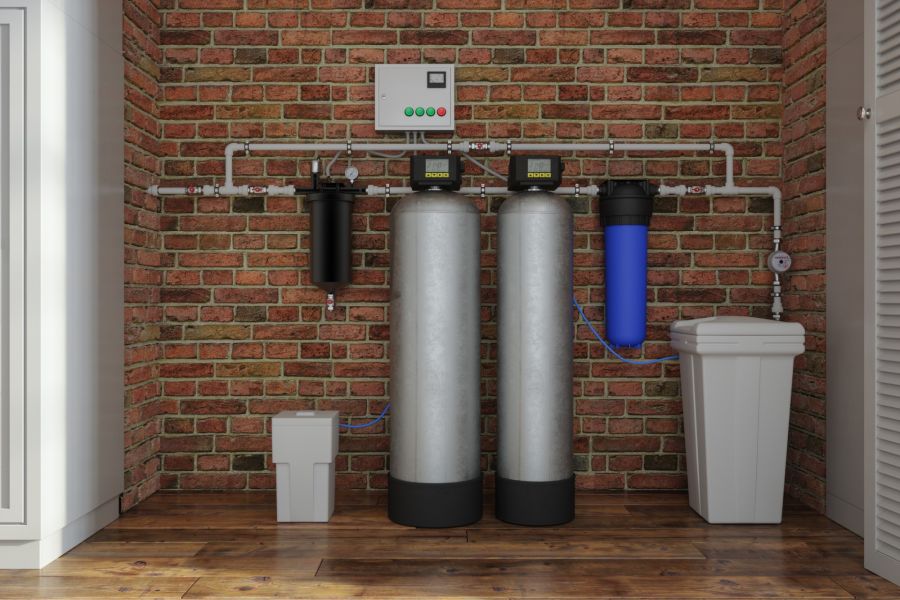
Arizona is one of a handful of states where arsenic in groundwater is a documented, geology-driven concern rather than an industrial accident. The Basin and Range geologic province, which covers the Phoenix metropolitan area, contains volcanic rock and mineralized sediments that naturally release arsenic into aquifers over time. USGS research on arsenic in United States groundwater resources identified this province as an area of elevated naturally occurring arsenic concentrations. The EPA Maximum Contaminant Level for arsenic in public drinking water is 10 micrograms per liter (10 ppb), set in 2001. Phoenix municipal water from the Salt River Project and Central Arizona Project surface supplies generally meets that standard. The higher-risk populations are residents on smaller community water systems, users of blended groundwater sources during dry-season pumping increases, and the estimated 200,000 plus Arizona households relying on private wells, which receive no federal or state monitoring requirement.
Schedule a free water test for your Phoenix home.
The geology behind Arizona's arsenic problem
Arsenic is not a manufactured pollutant in Arizona's groundwater. It is a naturally occurring element released as groundwater interacts with the region's volcanic and sedimentary geology.
The USGS National Water-Quality Assessment Program documented elevated arsenic concentrations across the western United States, with the Basin and Range province standing out as a region of particular concern. The USGS Circular 1182, "Arsenic in Ground-Water Resources of the United States," (pubs.usgs.gov/circ/circ1182) identifies the Basin and Range, which includes the Phoenix metro and Tucson metro areas, as a region where arsenic from geologic sources consistently elevates groundwater concentrations above federal drinking water standards in portions of the aquifer.
Two geologic processes drive this. First, arsenic binds to iron oxide minerals in volcanic rock. When groundwater chemistry changes, particularly when oxygen levels fall in deeper wells or when pH shifts, arsenic releases from those minerals into solution. Second, historic mining across Arizona brought arsenic-bearing ore to the surface, and tailings from copper, gold, and silver mining have contributed arsenic to shallow groundwater in mining-affected areas.
The Phoenix metro sits in the Salt River Valley, drawing water from the Salt and Verde River watersheds via Salt River Project infrastructure and from the Colorado River via the Central Arizona Project canal. This surface water undergoes treatment before distribution and carries a different arsenic profile than the region's groundwater. The risk calculus changes for communities drawing more heavily from local groundwater wells, which occurs seasonally when surface water allocations fall during drought years.
For context on related contaminants in the Phoenix water supply, see our overview of Phoenix water quality and what it means for homeowners.
What the EPA standard means and where it came from
The EPA set the current arsenic Maximum Contaminant Level of 10 micrograms per liter (10 ppb) in January 2001 under the Safe Drinking Water Act. Public water systems were required to comply by January 23, 2006. The previous standard was 50 ppb, a limit that dated to 1942 and was based on science developed before modern epidemiological research on arsenic and cancer risk. (Source: EPA National Primary Drinking Water Regulations, epa.gov/ground-water-and-drinking-water.)
The 10 ppb standard reflects the EPA's determination of the feasibility of treatment at that level across the regulated water system population. It is not a "safe" threshold in the toxicological sense. The EPA's own risk assessment estimated that 10 ppb lifetime exposure carries a lung and bladder cancer risk in the range of 4 in 1,000 to 1.5 in 10,000, depending on the exposure model used, a risk level that is orders of magnitude above the 1-in-1-million benchmark the EPA uses for carcinogens in other contexts.
This matters practically for Phoenix metro households because compliance with 10 ppb means a water system is meeting the law. It does not mean arsenic is absent from the water or that the underlying risk is zero.
Arizona ADEQ and the state monitoring framework
Arizona ADEQ administers the federal Safe Drinking Water Act within Arizona, meaning it is the regulatory body that monitors public water systems for arsenic compliance, issues violations, and oversees corrective action. The agency maintains monitoring data and violation records at azdeq.gov.
Arizona has roughly 1,500 community water systems, ranging from Phoenix Water Services, which serves more than 1.6 million people, to small rural systems serving a few dozen connections. The arsenic burden is not evenly distributed across those systems.
| Water source type | Arsenic risk profile | Regulatory coverage |
|---|
| Phoenix city municipal (surface water dominant) | Lower: treated SRP and CAP surface supply | Fully regulated, annual CCR |
| Smaller AZ community systems (groundwater) | Higher: Basin and Range aquifer exposure | Regulated, periodic ADEQ monitoring |
| Private wells (rural and peri-urban) | Highest: no treatment, no monitoring | Not covered by SDWA |
| Seasonal groundwater blending | Variable: increases when surface allocations fall | Monitored at system level |
Source: EPA Safe Drinking Water Act framework (epa.gov/sdwa); Arizona ADEQ Drinking Water (azdeq.gov).
Small community water systems in Arizona's rural areas, where groundwater is the primary supply and treatment infrastructure is limited, have historically faced the highest rate of arsenic Maximum Contaminant Level violations in the state. The EPA's enforcement data shows that small systems serving fewer than 500 people account for a disproportionate share of arsenic violations nationally.
Phoenix municipal water and arsenic
The City of Phoenix Water Services Department draws the majority of its supply from Salt River Project and Central Arizona Project surface water, two sources that carry arsenic in concentrations well below the 10 ppb standard under normal operations. The city's annual Water Quality Report, available at phoenix.gov/waterservices, reports arsenic results for each treatment plant.
The city also operates wells that contribute to supply during peak demand or drought conditions. These groundwater sources carry higher natural arsenic concentrations than treated surface water. The blending ratio between surface water and groundwater shifts by season and by drought year, meaning Phoenix tap water arsenic levels are not static across the calendar year.
Scottsdale, Mesa, Tempe, Chandler, and other Valley cities operate their own water systems with their own supply mix, treatment processes, and reporting. Each publishes an annual Consumer Confidence Report required under the Safe Drinking Water Act.
For Phoenix area homeowners in Chandler specifically, our Chandler water softener guide covers the local water supply characteristics and treatment options in more detail.
Private wells: the unmonitored population
Arizona's rural and semi-rural areas outside city water service boundaries rely heavily on private wells. The EPA's Safe Drinking Water Act does not cover private wells. Arizona ADEQ has no authority to require private well owners to test their water, and no routine monitoring of private well water occurs at the state level.
USGS data consistently shows that private wells in Arizona's Basin and Range geology carry a higher probability of arsenic above 10 ppb than municipal supplies. A 2017 USGS study of private well water quality nationally estimated that approximately 2.1 million people in the United States rely on private wells with arsenic above the EPA standard, with higher concentrations in western states including Arizona. (Source: USGS National Water-Quality Assessment Program findings, published in Science of the Total Environment, available through usgs.gov.)
For a private well owner in the Phoenix metro fringe areas, Buckeye, Queen Creek, Cave Creek, Wickenburg, and similar communities where wells are common, arsenic testing at an accredited laboratory is the only way to establish what is in the water.
What removes arsenic from tap water at home
The technology with the strongest evidence base for residential arsenic removal is reverse osmosis.
Reverse osmosis (NSF/ANSI 58 certified): A properly designed and maintained point-of-use RO system removes 90 to 99 percent of arsenic from drinking water at the tap. NSF International certifies systems specifically for arsenic reduction under Standard 58, meaning the removal claim has been independently tested against a defined arsenic concentration. When selecting a system, look for NSF/ANSI 58 certification on the product itself, not a generic "reduces contaminants" marketing statement. For a broader overview of when RO makes sense for a Phoenix household, see our guide to reverse osmosis systems in Phoenix.
Activated alumina: This media selectively adsorbs arsenic and can be effective in whole-house point-of-entry configurations. It requires periodic regeneration and is more commonly deployed at the utility scale than in residential applications.
Ion exchange: Certain anion exchange resins remove arsenate (the predominant arsenic form in oxidizing groundwater) effectively. Like activated alumina, these systems require maintenance and are more common in commercial and utility contexts.
What does not remove arsenic: Standard sediment filters, activated carbon filters, and water softeners do not remove arsenic. A water softener addresses hardness minerals through an ion exchange process that does not capture arsenic. Arizona water is generally hard (see our Phoenix water quality guide), so many households run both a softener and an RO system for comprehensive treatment.
How to find your system's arsenic data
Every public water system must provide customers with a Consumer Confidence Report by July 1 each year. The CCR lists regulated contaminants detected, the measurement level, and the legal limit. Arsenic is a regulated contaminant and must appear in the report whenever it is detected at or above the minimum reporting level.
Steps to find your data:
- Contact your water utility directly and request the most recent CCR. Most utilities post it on their website.
- Search the EPA's Safe Drinking Water Information System at sdwis.epa.gov for your system's violation and monitoring records.
- Search the EPA's UCMR occurrence database at epa.gov/dwucmr for monitoring results from larger systems under the federal monitoring programs.
- For private well owners: contact an Arizona ADEQ-certified laboratory to arrange a water test. ADEQ maintains a list of certified labs at azdeq.gov.
A standard in-home free water test covers hardness, pH, chlorine, and total dissolved solids. Arsenic testing requires a laboratory panel. If your home is in an area with documented groundwater arsenic concerns, a certified lab test is the appropriate next step after an initial screening.
Schedule your free water quality screening for your Phoenix home.