Chandler, AZ sits in one of the hardest water zones in the United States. The city draws from a blend of Central Arizona Project (CAP) Colorado River water and local well water managed through the Salt River Project, producing tap water that typically tests at 12 to 16 grains per gallon (gpg). At those levels, scale forms inside water heaters, dishwashers, and shower fixtures within months. A Battelle Memorial Institute study found that water heaters operating at 12 or more gpg lose 22 to 29 percent of their efficiency within three years, a measurable cost that compounds every season. Chandler Water Utilities also uses chloramine for disinfection, which a standard carbon filter does not fully remove. This guide covers what is in Chandler tap water, how to size a softener for a local home, what a full system costs, and which combination of treatment equipment delivers clean water free of scale throughout the East Valley.
Book your free Chandler water test today or call (949) 873-1129. We will work around your schedule. No obligation.
How hard is the water in Chandler AZ?
Chandler tap water tests at 12 to 16 grains per gallon (gpg) on most residential water reports. That puts Chandler firmly in the hard to very hard range by Water Quality Association standards. Well water zones east of the 101 freeway frequently exceed 18 gpg.
Hardness comes from calcium and magnesium carbonate picked up as water travels through Arizona's limestone and sandstone geology. CAP canal water has already crossed hundreds of miles of mineral rich terrain before it arrives in Chandler and blends with Salt River Project supplies and the city's own well water, which tends to carry higher mineral loads.
At 12 to 16 gpg, scale forms on water heater elements and tank linings within the first year, cutting thermal efficiency 22 to 29 percent within three years according to the Battelle Memorial Institute study. Dishwashers develop glass etching and clogged spray arms. Showerheads and faucet aerators restrict within weeks. Laundry requires 30 to 50 percent more detergent because hard water neutralizes surfactants before they clean.
To know exactly where your home falls in the 12 to 16 gpg range, schedule a free water test in Chandler. Hardness varies meaningfully by neighborhood based on which supply lines and well sources feed that distribution zone.
Does Chandler AZ need a water softener?
Yes, the great majority of Chandler homeowners benefit from a water softener. Water above 7 gpg is classified as hard. At 12 to 16 gpg, Chandler sits well past that threshold, and the financial impact on water heaters alone justifies the investment.
The return on investment is straightforward. At 12 or more gpg, a Battelle study found that water heater efficiency drops 22 to 29 percent within three years, adding measurable wasted energy costs before accounting for the shortened appliance lifespan. East Valley plumbers routinely see water heater failures at 4 to 6 years on untreated Chandler water, well short of the standard 6 to 12 year warranty.
Beyond the water heater, scale gradually narrows pipe diameter, clogs supply stops and valves, and increases soap and detergent use by 30 to 50 percent because hard water neutralizes surfactants before they clean. Families on softened water typically see meaningful savings on cleaning products. Mineral residue that remains on skin after showering is also a frequent trigger of dryness and irritation for Chandler residents.
See water softener options for Chandler or call (949) 873-1129 for a no pressure quote.
What does Chandler tap water have in it?
Chandler tap water contains calcium, magnesium, sodium, bicarbonates, trace nitrates, and chloramine from disinfection treatment. Total dissolved solids (TDS) run from 450 to 650 mg/L depending on the season and which water source is blended into the local distribution system that day.
Hardness minerals. Calcium and magnesium carbonate account for the 12 to 16 gpg reading. These are the primary drivers of scale in plumbing, water heaters, dishwashers, and coffee equipment.
Chloramine. Chandler Water Utilities uses chloramine instead of free chlorine because it remains stable over the long pipe distances of a spread out metro. It creates fewer trihalomethane byproducts but does not dissipate on its own. Setting a glass of tap water on the counter overnight does nothing. You need a catalytic carbon filter or a reverse osmosis system in Chandler to meaningfully reduce it.
TDS and the summer spike. Total dissolved solids rise each summer as CAP canal water loses volume to evaporation along its 336 mile delivery route from Lake Havasu. The same mineral content concentrates into progressively less water, pushing Chandler TDS from a spring average near 450 mg/L toward 600 to 650 mg/L by August. This is the same pattern documented across the Phoenix metro. For the full picture on how summer affects East Valley and Nevada tap water, see our article on Phoenix and Las Vegas summer salty water.
Trace contaminants. Chandler water meets all EPA maximum contaminant levels. The Arizona Department of Environmental Quality (ADEQ) monitors compliance statewide. Cross-reference with EPA drinking water resources for current federal standards before making treatment decisions.
A free water test from our Chandler team gives you hardness, TDS, chlorine, iron, and pH readings specific to your home address.
Ready to stop scrubbing mineral scale? See our Chandler combo systems or call (949) 873-1129 to talk through your options.
What type of water softener do I need in Chandler AZ?
Every home is different. The right system for your home depends on grain capacity requirements, your water hardness level, plumbing configuration, and whether filtration is added at the same time. Contact us for a free quote.
Here is a breakdown of the main system types for the Chandler market:
Entry level single tank (24,000 to 32,000 grain). Suited for apartments or one to two person homes where daily use stays under 60 gallons.
Mid range whole home (40,000 to 48,000 grain). The most common choice for Chandler homes with three to four occupants. A demand initiated unit at this capacity regenerates every three to five days at typical household use.
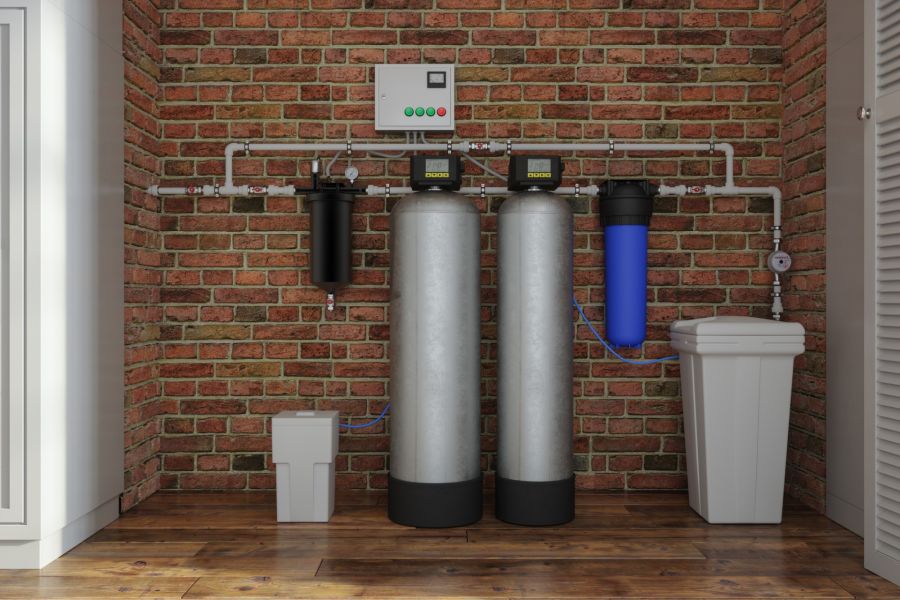
High capacity twin tank (64,000 to 80,000 grain). Best for larger families, homes in well water zones above 18 gpg, or properties where iron exceeds 2 ppm. The twin tank design keeps one tank in service at all times so you never experience a hard water window during the regeneration cycle.
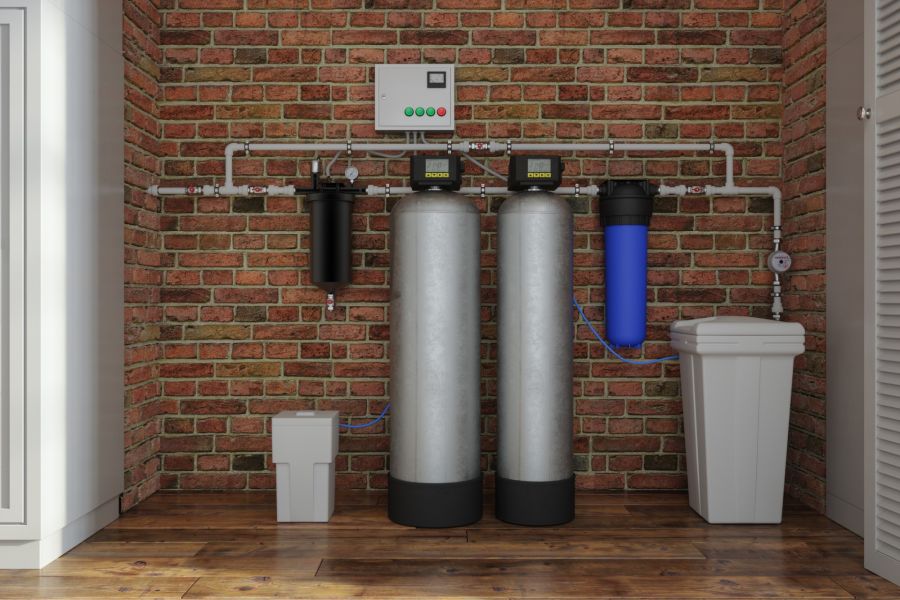
Combo system (softener plus whole home carbon filtration). Pairing a 48,000 grain softener with a whole home catalytic carbon filter treats both hardness and chloramine at the point of entry. This is the best value upgrade for most Chandler homes. See our combo systems page.
Reverse osmosis add-on. A five stage RO unit for the kitchen is the most cost effective path to low TDS drinking water when added alongside a softener job. See reverse osmosis systems for Chandler.
Ongoing salt use. Demand initiated models cut salt use 20 to 40 percent compared to older timer based units by regenerating only when capacity is fully consumed.
Get a quote on our water softeners page for Chandler.
What size water softener do I need in Chandler?
Most Chandler homes with three to four residents require a 40,000 to 48,000 grain softener at local water hardness levels of 12 to 16 gpg. Homes with five or more residents or iron contamination above 1 ppm need to size up significantly.
The standard sizing formula is: daily water use in gallons multiplied by water hardness in gpg multiplied by 7 (days between regeneration cycles) equals the minimum grain capacity you need.
For a three person household at 14 gpg (the midpoint of Chandler's range) using roughly 75 gallons per day, the calculation is 75 x 14 x 7 = 7,350 grains per week. A 48,000 grain unit handles this load and regenerates every 6 to 9 days on demand initiated control.
For a five person household in a well water zone at 18 gpg using roughly 125 gallons per day, the calculation is 125 x 18 x 7 = 15,750 grains per week. That household needs a 64,000 grain unit at minimum, and a twin tank system is the better choice so soft water stays available during every regeneration cycle.
Iron adds to the grain load. Each ppm of soluble iron counts as roughly 4 gpg of equivalent hardness. A home at 14 gpg hardness with 2 ppm iron should size as if the water were 22 gpg.
Sizing mistakes cost more than a thorough upfront test. Book a free water test to confirm hardness, iron, and TDS before buying.
Is Chandler tap water safe to drink?
Yes, Chandler tap water meets all federal Safe Drinking Water Act standards. Chandler Water Utilities publishes an annual Consumer Confidence Report confirming it is safe. However, meeting safety standards and tasting good or being free of mineral scale are different things, which is why many residents add home filtration.
The Chandler Public Works and Utilities department monitors more than 90 regulated contaminants and publishes annual quality data. Chandler consistently meets all EPA maximum contaminant levels. Meeting safety standards and delivering scale free, great tasting water are different goals.
There are quality issues that safety compliance does not address:
Chloramine taste. Many residents notice a faint chemical taste, especially in winter when the CAP blend shifts. Standard pitcher filters do not remove chloramine. A catalytic carbon filter, like those in our whole house water filtration systems in Chandler, is designed specifically for chloramine reduction at whole home flow rates.
Mineral taste and TDS. At 450 to 650 mg/L TDS, tap water tastes noticeably minerally. A reverse osmosis system under the kitchen sink drops this to under 50 mg/L, making a clear difference in coffee, tea, and ice.
Summer saltiness. TDS spikes each summer as CAP water concentrates along the delivery route, a predictable pattern across the Phoenix metro. See the full breakdown in our article on Phoenix and Las Vegas summer salty water.
What is the best water treatment for Chandler AZ homes?
The best treatment for most Chandler homes is a combination system pairing a salt based ion exchange water softener with a reverse osmosis drinking water system. This combination removes hardness minerals, reduces TDS, and eliminates chloramine from the water you cook and drink.
Here is the recommended system approach by home type:
Standard East Valley home (three to four people, city water, 12 to 16 gpg). A 40,000 to 48,000 grain demand initiated softener paired with a five stage reverse osmosis unit at the kitchen addresses the two biggest complaints in Chandler: appliance scale and poor tasting drinking water. See combo systems for Chandler.
Chandler home with chloramine sensitivity or skin concerns. Add a whole house water filtration system in Chandler with catalytic carbon media upstream of the softener. This treats chloramine at every fixture.
Well water property in Chandler. Well water above 18 gpg often carries elevated iron and manganese too. The right sequence is a sediment prefilter, then an iron filter, then a high capacity softener, then RO for the kitchen. Our Chandler team provides free well water testing and full system design.
The right system depends on your specific water test results. Hardness varies across Chandler, from 5 to 20 grains per gallon according to the City of Chandler water quality FAQ. A free water test and no pressure consultation gives you a clear, specific starting point before you spend anything.
Frequently Asked Questions
How hard is Chandler AZ water? Chandler water averages 12 to 16 gpg, classified as hard to very hard. Well water zones can exceed 18 gpg.
Does Chandler Water use chloramine? Yes. Chandler Water Utilities uses chloramine instead of free chlorine. You need a catalytic carbon filter or reverse osmosis system to remove it effectively.
What size water softener do I need for a Chandler AZ home? Three to four person homes typically need 40,000 to 48,000 grain capacity. Well water properties above 18 gpg should size up to 64,000 grains.
Does Chandler tap water taste salty in summer? Yes. TDS climbs to 600 to 650 mg/L by August as CAP canal water concentrates. A reverse osmosis system reduces this to under 50 mg/L at the tap.
Take the next step. Call (949) 873-1129 or schedule a free in-home water test online. We serve Chandler, Gilbert, Tempe, Mesa, and the broader East Valley. We will work around your schedule.
Verify current Chandler water quality data directly with the Chandler Public Works and Utilities department or the Arizona Department of Environmental Quality.