Scottsdale tap water is hard to very hard, testing 13 to 16 grains per gallon depending on the seasonal blend of CAP Colorado River water and Salt River Project supply. The city uses chloramine as its primary disinfectant, a combination of chlorine and ammonia that requires catalytic carbon media to remove effectively. Standard activated carbon alone does not break chloramine bonds. Total dissolved solids run 500 to 750 mg/L most of the year, rising closer to the upper end every summer as Colorado River water concentrates in the CAP canal. Scottsdale does not ban softeners that use salt, so a water softener is a straightforward option for homeowners dealing with scale. For drinking water quality, a reverse osmosis system at the kitchen sink takes care of TDS and any residual disinfection byproducts. Most Scottsdale homes do best with a combo system that addresses all three problems at once.
Scottsdale Water serves around 240,000 accounts across the city, blending Colorado River water delivered by the Central Arizona Project with Salt River Project surface water and a portion of groundwater. The blend ratio shifts with season, precipitation, and reservoir levels, which is why your water can taste noticeably different in July than it did in March. This guide covers what is in your water, what the local chemistry means for filter selection, current cost ranges, and what a well configured treatment setup looks like for a typical Scottsdale home.
How hard is the water in Scottsdale AZ?
Scottsdale tap water tests at 13 to 16 grains per gallon, placing it in the hard to very hard category by US Water Quality Association standards. The hardness comes from calcium and magnesium picked up as water moves through the regional source blend.
Hardness in the 13 to 16 gpg range causes visible scale deposits on showerheads, faucets, and glass surfaces. It shortens the useful life of water heaters, dishwashers, and washing machines. The Arizona Department of Environmental Quality monitors hardness as part of water quality oversight for municipal systems, and Scottsdale Water publishes annual Consumer Confidence Reports with hardness readings you can verify at azdeq.gov.
Your hardness reading can shift slightly depending on the season. When Scottsdale Water draws more from the Salt River Project during high snowpack months, hardness may fall toward 12 to 13 gpg. During summer, when CAP water makes up a larger share of the blend, readings can push toward the upper end of the 16 gpg range. If you want a current reading for your specific address, a free water test gives you hardness, TDS, pH, and iron numbers at the tap.
For Scottsdale homeowners dealing with scale, the correct tool is a water softener. A properly sized softener removes calcium and magnesium through ion exchange, eliminating the mineral that forms scale without changing your total TDS reading. If you are seeing white buildup on faucets, foggy glassware, or dry skin after showers, those are the standard signs that hardness is affecting your home. Our water softeners in Scottsdale service page covers sizing and timing.
What does Scottsdale tap water taste like?
Most Scottsdale tap water has a mild mineral or slightly flat taste that intensifies in summer. Chloramine disinfection gives some residents a faint chemical note, different from the sharper chlorine smell that older Phoenix area systems once used.
Chloramine is formed when Scottsdale Water combines chlorine with ammonia during treatment. It is more stable than free chlorine in long distribution lines, which is why large cities across Arizona and Nevada prefer it. The tradeoff is a distinctive taste that some people describe as earthy or slightly metallic rather than the pool smell associated with free chlorine.
In summer, the taste profile shifts. CAP Colorado River water concentrates as snowpack runoff slows and canal evaporation increases. Total dissolved solids rise from a typical 500 to 600 mg/L toward 700 mg/L or higher by late summer. The EPA's secondary taste threshold for TDS is 500 mg/L, so summer Scottsdale water routinely crosses into the range where most people begin noticing a mineral quality. This is the same phenomenon covered in our Phoenix and Las Vegas summer salty water guide, and Scottsdale homeowners experience it on the same seasonal cycle as the broader Phoenix metro.
Old Town Scottsdale, Kierland, and Scottsdale Quarter businesses face this same challenge at higher volume. Restaurants, coffee shops, and ice providers in those commercial areas often run point of use carbon and reverse osmosis filtration to protect product consistency across seasons. What works for a commercial kitchen works equally well under a residential sink.
If the taste bothers your household, a catalytic carbon whole house filter takes care of the chloramine character, and a reverse osmosis unit at the kitchen sink removes the remaining minerals that drive summer taste changes. We cover how those two systems work together on our whole house water filtration in Scottsdale page.
Does Scottsdale water need a carbon filter?
Yes, and specifically a catalytic carbon filter. Scottsdale Water disinfects with chloramine, which requires a different filter media than standard chlorine. Catalytic carbon breaks the chloramine bond where conventional activated carbon cannot, making filter media selection the most important decision for Scottsdale homeowners.
Standard block carbon and standard granular activated carbon filters are designed primarily for free chlorine and organic compounds. They slow chloramine reduction to the point where even a correctly sized unit may not adequately remove it at the flow rates of a whole house system. Catalytic carbon is a modified form with higher surface energy that enables it to break the bond between nitrogen and chlorine in chloramine molecules directly.
This distinction matters practically because many homeowners add a whole house carbon filter expecting to resolve chloramine taste and find that it barely helps. The problem is not the filter size. It is the media type. If you are in Scottsdale and considering a whole house filter, specify catalytic carbon, not standard activated carbon.
There is a second reason the carbon filter question is particularly relevant in Scottsdale. Chloramine reacts with natural organic matter in pipes and fixtures to form disinfection byproducts including haloacetic acids and trihalomethanes. A properly sized catalytic carbon filter handles these compounds alongside the chloramine itself, protecting both taste and appliance longevity in one step.
The "carbon water filter Scottsdale" query category carries commercial demand from Old Town restaurant owners and residential demand from homeowners alike. Both groups are asking the same question for the same reason: Scottsdale uses chloramine for treatment, so carbon filtration with the correct media is not optional when taste and equipment life are priorities. Our reverse osmosis systems in Scottsdale page explains how a carbon stage upstream of an RO membrane extends membrane life by handling the chloramine that would otherwise degrade the membrane material.
Ready to see what your Scottsdale water contains? Schedule a free water test and we will test hardness, TDS, chlorine, pH, and iron at your tap. Results come with recommendations based on your water. Call (949) 873-1129 or book online, and we will work around your schedule.
What is the best water treatment system for Scottsdale?
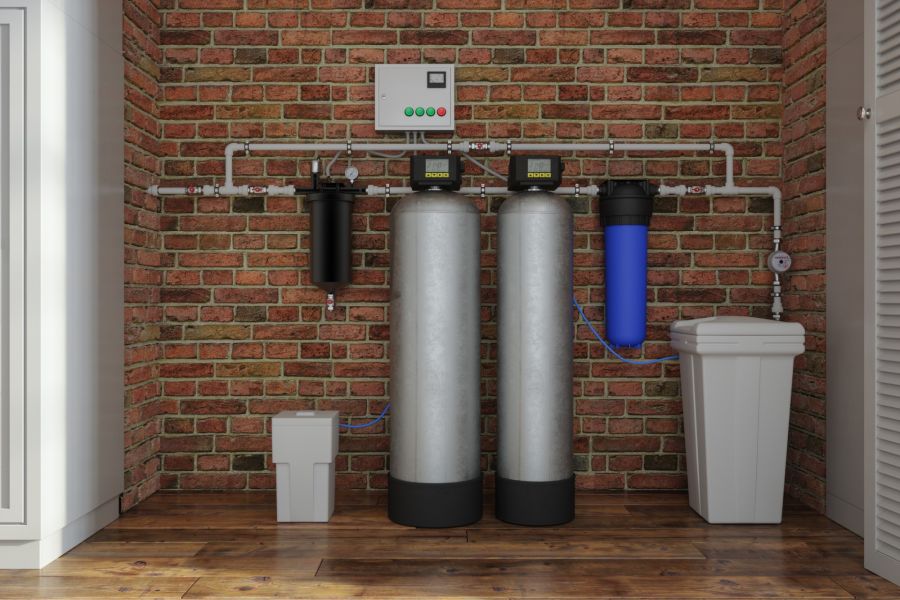
For most Scottsdale homes, the most effective approach uses a whole house catalytic carbon filter for chloramine, a water softener for hardness, and a reverse osmosis unit under the kitchen sink. Each component targets a different problem in the local water supply.
A whole house catalytic carbon filter goes at the point of entry, treating all water coming into the home before it reaches fixtures, appliances, or the softener. This protects the softener resin from chloramine degradation, which is a real concern. Chloramine damages resin beads faster than free chlorine does, shortening softener service life when the carbon stage is skipped or uses the wrong media.
The water softener handles calcium and magnesium, the minerals responsible for scale on water heaters, faucets, and glass. With 13 to 16 gpg hardness, an unsoftened Scottsdale home typically shows significant scale damage to water heaters within 5 to 7 years. A properly sized softener eliminates that loss and protects washing machines and dishwashers at the same time.
The reverse osmosis system sits at the kitchen sink and handles TDS and any remaining trace compounds for the water your family drinks and cooks with. A quality NSF/ANSI 58 certified unit drops a 700 mg/L summer reading to under 50 mg/L at the faucet, well below any taste threshold.
Our combo systems in Scottsdale page walks through how these three components work together, what the plumbing looks like, and how to maintain each stage. You can also visit our free water testing in Scottsdale page to schedule a baseline test before deciding on equipment.
For Scottsdale homeowners solving one problem at a time, the priority order is: catalytic carbon filter first (because it protects everything downstream), then water softener, then reverse osmosis drinking water system.
How do I get a quote for a water softener in Scottsdale AZ?
Every home is different. The right system depends on your home size, current plumbing, and whether a carbon filter is added to the same project. Most Scottsdale homes size to a 48,000 to 64,000 grain capacity unit.
Here is the general system approach by home type:
- Smaller home or condo with accessible plumbing. A basic softener is the starting point. Contact us for a specific recommendation.
- 3 to 4 bedroom home. A properly sized softener for your water conditions. Often paired with a catalytic carbon filter.
- Full combo system. A catalytic carbon whole house filter plus softener addresses both chloramine and hardness.
A demand initiated softener regenerates only when capacity is fully consumed, cutting salt use 20 to 40 percent compared to older timer based units.
For East Valley water chemistry context, our Chandler AZ water softener guide covers equipment choices for Chandler homeowners. For Scottsdale quotes, call (949) 873-1129. We will work around your schedule, and every free water test comes with recommendations based on your results.
Get an accurate quote before the summer TDS peak hits. Our water treatment specialists serve all Scottsdale neighborhoods including Old Town, Kierland, North Scottsdale, McCormick Ranch, and Gainey Ranch. Call (949) 873-1129 or book online.
Is Scottsdale tap water safe to drink?
Yes. Scottsdale Water consistently meets all EPA primary drinking water standards and publishes an annual Consumer Confidence Report. The water is tested continuously and disinfected with chloramine. No health violations have been reported in recent years, and Scottsdale ranks among Arizona's most monitored municipal systems.
Scottsdale Water operates under the Safe Drinking Water Act, which requires testing for over 90 regulated contaminants. The city's annual Consumer Confidence Report is publicly available and covers each parameter with test results and any actions taken. You can verify current compliance data through the Arizona Department of Environmental Quality.
The safety question is distinct from the quality question. Water can meet every safety standard and still taste bad, leave scale on fixtures, or shorten appliance life. Hardness, chloramine taste, and elevated TDS are not health violations. They are quality and performance issues that treatment equipment resolves.
Scottsdale has a carefully maintained distribution system and was among the first cities in Arizona to implement a water recycling program for irrigation and industrial uses. The city treats reclaimed water to a high standard, which reflects a broader culture of rigorous water management across its utility operations.
For households with infants on formula, immune concerns, or anyone following a low sodium diet, an NSF/ANSI 58 certified reverse osmosis system provides a meaningful additional layer of protection beyond what municipal treatment delivers. The EPA drinking water standards page explains what each maximum contaminant level means and the health basis behind each limit.
What water filtration is recommended for Scottsdale homes?
Scottsdale water professionals consistently recommend catalytic carbon whole house filtration as the first step, given chloramine disinfection. A water softener addresses hardness, and a reverse osmosis system at the kitchen sink handles TDS and any remaining disinfection byproducts in drinking water.
This recommendation is grounded in Scottsdale's specific water chemistry, not a generic approach. Many cities use free chlorine, where standard activated carbon works fine for whole house filtration. Scottsdale's chloramine chemistry requires the catalytic upgrade. If you moved from a city that used free chlorine and kept your old whole house filter, that filter may not be performing as expected in your Scottsdale home. Media type is the variable that most often explains a filter that seems to have no effect on taste.
The sequence of components matters as well. Catalytic carbon goes first, at the point of entry. The softener follows, after the carbon stage. Running the softener before the carbon filter would expose the resin to chloramine, accelerating resin degradation. Running it in the correct order typically extends softener resin life to 10 or more years before a resin replacement is needed.
For Scottsdale condo owners, the approach may be simpler. If your building handles common area filtration or you cannot modify the main supply line, a point of use reverse osmosis system under the kitchen sink handles taste and TDS at the drinking water tap without any main line work. Many Scottsdale condo residents start there and add whole house filtration later when they move to a standalone home.
Scottsdale homeowners with questions about what their specific address needs can start with a free water test. Our technicians test hardness, TDS, chlorine, pH, and iron at your tap. Results are explained on the spot, with recommendations based on your results that cover which equipment stages apply to your address and which you can skip.
For a related East Valley guide with similar water chemistry, see our Chandler AZ water softener guide. For context on summer TDS concentration across the Phoenix metro, our Phoenix and Las Vegas summer salty water guide covers the same seasonal CAP cycle in detail.
Scottsdale water is hard, minerally in summer, and treated with chloramine. Those three facts determine which equipment belongs in your home. A free water test at your address is the fastest way to move from general knowledge to a specific recommendation for your household. Schedule your free water test in Scottsdale or call (949) 873-1129. We serve Scottsdale and will work around your schedule.