If your Phoenix or Las Vegas tap water tastes saltier in August than in April, you are not imagining it. Summer reduces snowpack inflow, increases canal and reservoir evaporation, and concentrates dissolved minerals in your source water. TDS readings routinely cross the EPA's 500 mg/L taste threshold during late summer in both regions. Here is what is actually happening and what to do about it.
The Southwest is built on borrowed water. Phoenix pulls from the Salt River Project's reservoir system and from the Central Arizona Project canal, which delivers Colorado River water across 336 miles of open desert. Las Vegas draws almost all of its supply from Lake Mead, the same Colorado River system. Both regions live with naturally high mineral loads, and both see those mineral loads spike in the same months every year. This guide explains why, what the EPA threshold actually means, and which fix solves the taste problem (and which one does not).
What TDS Actually Is
TDS stands for total dissolved solids. It is a single number, usually reported in milligrams per liter or parts per million, that represents the combined weight of every dissolved mineral, salt, and small organic particle in your water. The major contributors in Southwest tap water are calcium, magnesium, sodium, bicarbonate, sulfate, chloride, and silica.
TDS is not a measure of bacteria, chlorine, or volatile organic compounds. A reverse osmosis system can reduce TDS to near zero while a water-quality issue like chloramine taste or nitrate contamination requires a different filter entirely. Knowing your TDS number is step one in any diagnostic, but it is not the whole story.
A handheld TDS meter is the cheapest piece of useful diagnostic equipment a homeowner can buy. Most read accurately enough to track changes month to month, which is exactly what you want to confirm a summer spike.
Why Desert Water Systems Have High TDS to Begin With
The Colorado River is one of the saltiest large river systems in the United States. Its water passes over and through ancient evaporite deposits, picks up agricultural runoff from upstream farms, and concentrates further every time it sits in a reservoir. By the time Colorado River water reaches Lake Havasu (the intake point for the Central Arizona Project) or Lake Mead (the intake point for the Southern Nevada Water Authority), its TDS sits in the 600 to 700 mg/L range as a baseline.
Salt River Project water, which Phoenix also uses, comes from the Salt and Verde rivers and runs slightly lower in TDS than CAP water, but still high compared to most US cities. Phoenix-area utilities blend SRP and CAP supplies in proportions that change with season, demand, and treatment-plant capacity. That is why a Mesa home and a west-Phoenix home can taste different on the same day, and why the same kitchen tap can taste different in August than it did in April.
Las Vegas is even more concentrated as a single source. The SNWA pulls nearly all of its drinking water from Lake Mead through two deep intakes. There is no real blending option. Whatever Lake Mead's TDS is on a given week, that is what Las Vegas drinks.
The CAP Evaporation Problem
The Central Arizona Project moves water uphill for 336 miles, from Lake Havasu near Parker to its terminus south of Tucson. The entire route is open canal across the Sonoran Desert, with daytime summer temperatures above 100 degrees Fahrenheit for months at a stretch.
CAP's own published operating data puts annual evaporation losses at roughly 20 percent of total delivery volume. That number alone is striking, but its effect on water taste is the part most homeowners do not realize: when water evaporates, only the H2O leaves. Every dissolved mineral stays in solution, and the remaining water becomes more concentrated.
A simple way to think about it: if 100 gallons of 600 mg/L water enters the canal at Lake Havasu and 80 gallons reach the treatment plant, those 80 gallons now carry the same total mineral load that 100 gallons used to. The math works out to roughly 750 mg/L by the time it reaches the plant intake. Add summer heating effects on top of that, and the seasonal spike becomes very real.
The SNWA and Lake Mead Situation
Las Vegas has its own version of the same problem, in a different form. Lake Mead is a reservoir, not a flowing canal, but the same physics apply. When inflow from the Colorado River drops in summer and air temperatures climb above 110 degrees, evaporation off the surface concentrates whatever water remains.
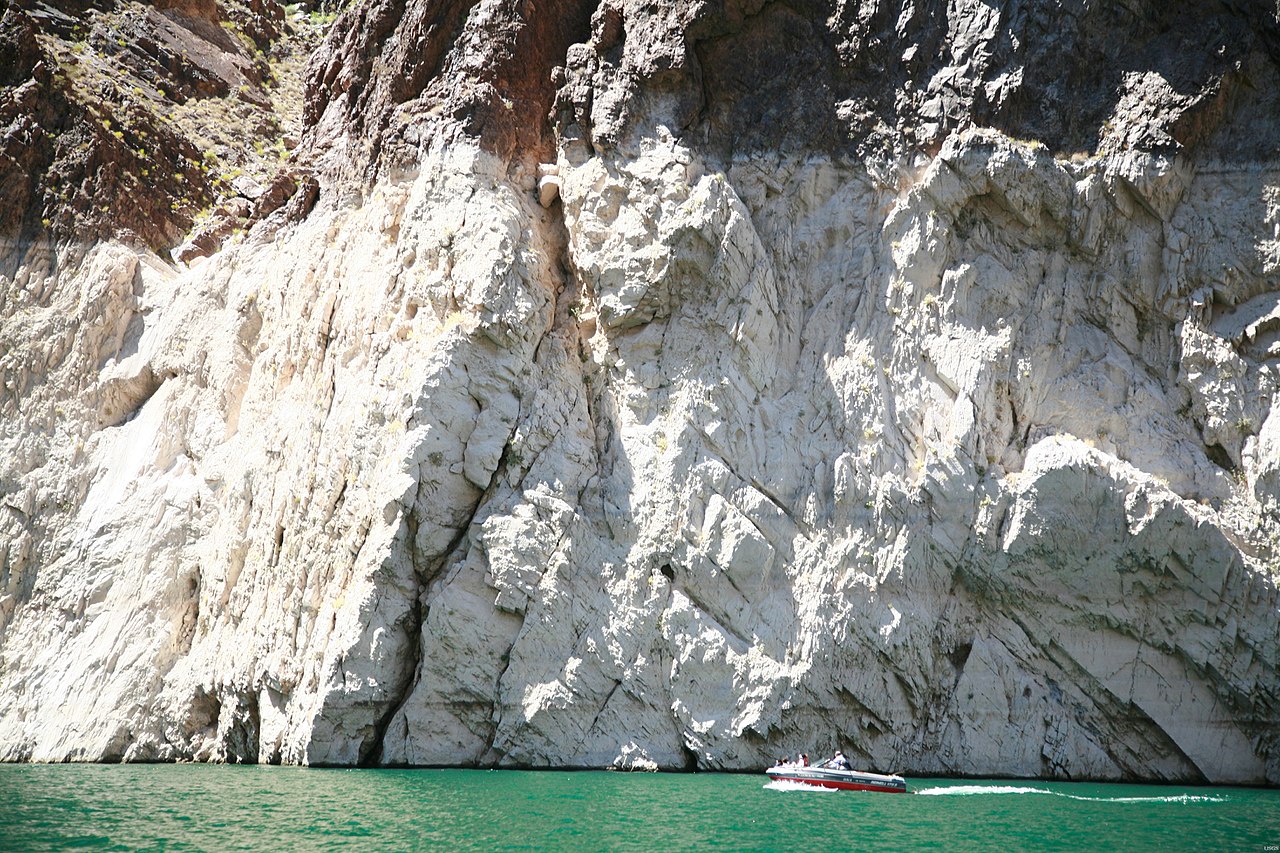
Lake Mead has also spent much of the last decade at historically low storage levels, with the visible "bathtub ring" along the canyon walls showing how far the water has dropped. Lower lake volume means a smaller buffer against concentration. The same amount of dissolved mineral load gets spread across less water, which raises the TDS of the supply that SNWA pulls in.
SNWA's annual water quality report has tracked these shifts for years. The agency publishes ranges rather than single numbers because conditions move so much across the year. Summer readings consistently sit at the upper end of those ranges, and late-summer numbers can briefly exceed the EPA secondary threshold.
The EPA's 500 mg/L Threshold and What It Means
The EPA sets two kinds of drinking-water standards. Primary standards (MCLs) are health-based and enforceable. Secondary standards (SMCLs) are aesthetic guidelines around taste, odor, color, and corrosivity. The secondary MCL for TDS is 500 mg/L.
Above 500 mg/L, the EPA notes that water may have a noticeable salty, bitter, or metallic taste, may leave more mineral spotting on glassware, and may be more corrosive to plumbing. Below 500 mg/L, most people do not consciously taste minerals at all.
Phoenix and Las Vegas both run baseline TDS in the 400 to 600 mg/L range and routinely cross 700 to 900 mg/L during summer source-concentration events. That means residents in both metros experience the EPA's "noticeable" threshold every year, often for months at a time. The water is not unsafe by primary standards, but the secondary standard is exactly the line where taste complaints start.
Worth noting: the 500 mg/L threshold is not a hard sensory cutoff. Some people detect mineral taste at 400 mg/L. Others do not flinch until 800 mg/L. Children, who have more sensitive taste perception than adults, tend to notice changes earliest. If your kids suddenly start refusing water from the kitchen tap in July, trust their palate.
Why Water Softeners Do Not Fix This
A water softener is one of the most common pieces of water-treatment equipment in Arizona and Nevada homes, and for good reason: both regions have very hard water. But softeners do not reduce TDS, which catches a lot of homeowners off guard.
Here is what a softener actually does. It runs incoming water through a resin bed that swaps two calcium or magnesium ions out of solution and puts two sodium ions in their place. The total ion load stays the same. The water still carries the same mass of dissolved minerals. Your TDS meter will read essentially the same number before and after the softener, sometimes very slightly higher on the softened side because sodium is lighter than calcium per ion.
What changes is the type of minerals. Calcium and magnesium cause scale, spotting, and stiff laundry. Sodium does not. So a softener solves the hard-water problems beautifully while leaving the salty-taste problem untouched. In some cases a softener can actually make the salty taste worse on the cold drinking-water tap, because sodium contributes more to perceived saltiness per milligram than calcium does.
If you have a softener and your water still tastes salty in summer, the softener is not broken. It just is not the right tool for this job.
The Actual Fix: Reverse Osmosis
Reverse osmosis is the residential-scale solution for high-TDS water. A standard under-sink RO unit pushes water through a semipermeable membrane that blocks roughly 95 to 99 percent of dissolved solids. A 900 mg/L summer reading at the city tap typically comes out of the RO faucet at 20 to 45 mg/L, which is well below any taste threshold and close to the TDS of premium bottled spring water.
A few practical notes for desert homes:
- Pre-filters carry more load. Phoenix and Las Vegas water has high sediment, silica, and chlorine relative to most cities. Sediment and carbon pre-filters in front of the RO membrane need to be changed every 6 to 12 months rather than the once-a-year cadence most manufacturers print on the box.
- Membranes last shorter in hot climates. A standard 24-month membrane replacement schedule is realistic for desert homes, sometimes shorter if you run higher daily volumes.
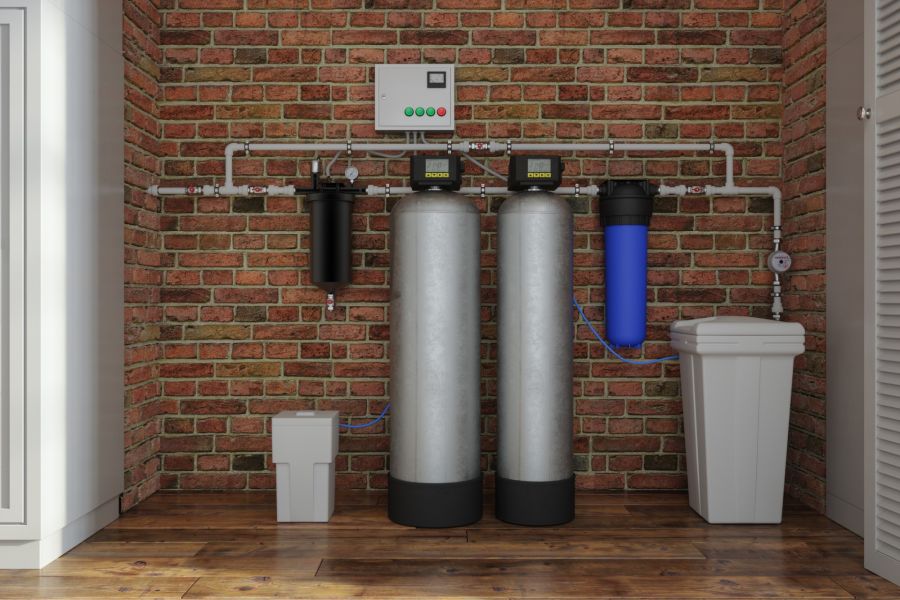
- Whole-home RO is rarely needed. Most homes use under-sink RO only for the drinking and cooking tap. Whole-home RO costs significantly more, wastes more water during production, and treats water you will use for showers and laundry where TDS does not matter much.
- Pair RO with a softener if you have both problems. The softener handles scale on appliances and fixtures. The RO handles taste at the kitchen sink. Our combo systems overview walks through how the two pieces work together.
If you are deciding whether RO is right for your home, our signs you need reverse osmosis guide covers the symptoms in more detail. For the full equipment overview, see our reverse osmosis services page.
Recommended Method
| Your situation | Likely cause | Recommended action |
|---|
| Phoenix home, taste change starts in July | CAP/SRP summer source shift, elevated TDS | Under-sink RO at the kitchen tap |
| Las Vegas home, taste worsens August through October | Lake Mead concentration plus evaporation | Under-sink RO at the kitchen tap |
| Have a softener, water still tastes salty | Softener does not reduce TDS | Add RO downstream of softener |
| Salty taste plus scale on fixtures | High TDS plus high hardness | Softener + RO combo system |
| Salty only on hot side | Water heater anode corrosion, not source water | Service the water heater, anode rod replacement |
| TDS reads above 1,000 mg/L year-round | Possible private well or backflow issue | Schedule a professional water test |
The pattern most desert homeowners follow: use a properly sized softener for scale, then add an under-sink RO for drinking and cooking water. The combination handles both problem categories and lasts 10 to 15 years with regular filter changes.
Call a Professional If...
Some of this is DIY-friendly. A handheld TDS meter, a brine-tank check, and a hot-versus-cold taste test will get you most of the way to a diagnosis on a Saturday afternoon. But there are situations where you want a professional on site:
- TDS readings stay above 1,000 mg/L even at the city-side hose bib (before any household equipment)
- You are on a private well in outlying Maricopa, Pinal, or Clark County rather than a municipal supply
- Salty taste appeared suddenly after a city main repair or hydrant flush in your neighborhood
- Someone in the household is on a sodium-restricted diet, dialysis, or formula-feeding an infant
- Your existing softener or RO system is more than 10 years old and never been serviced
- You suspect backflow or cross-contamination (off smells, color change, or sudden pressure drop)
Our free in-home water test covers hardness, pH and mineral content, TDS, chlorine levels, and iron and manganese. The numbers tell you exactly what you are dealing with before any equipment goes in.
Summer Maintenance Tips for Desert Water
- Check your RO pre-filters every 6 months during the summer-spike season, not just once a year.
- Plan membrane replacement at 24 months max. Hot-climate operation shortens membrane life.
- Watch your softener brine tank monthly. Phoenix and Las Vegas heat speeds salt bridging in summer.
- Keep a baseline TDS reading from spring. When summer numbers jump 200 to 300 mg/L above your baseline, you have confirmation that the source water shifted (not your equipment).
- After any city main repair in your neighborhood, run the lowest cold-water fixture for 5 minutes before drinking.
- Subscribe to your utility's water-quality alerts. Phoenix Water Services and SNWA both send notices when source blends or treatment processes change.
If you are seeing related hard-water symptoms (scale, spotting, stiff laundry), our 7 hard water signs guide covers what else to look for. For the deeper picture of what is in Phoenix tap water, the Phoenix water quality overview and the Phoenix salty water TDS and sodium guide cover the source-blend story in more detail. Las Vegas homeowners choosing a whole-house filter should read our Las Vegas whole-house water filter guide.
Get a Free Water Test in Phoenix or Las Vegas
You cannot fix what you have not measured. Our free in-home water test covers hardness, pH and mineral content, TDS, chlorine levels, and iron and manganese, with on-site testing and recommendations based on your results. We serve Phoenix, Scottsdale, Mesa, Chandler, Gilbert, Las Vegas, Henderson, and the surrounding service areas.
Schedule a free water test or call to ask about adding a reverse osmosis system at your kitchen sink. We will work around your schedule.