The American Southwest has some of the hardest water in the country. Whether you live in the Phoenix metro, Southern California, or the Las Vegas area, understanding your local water quality is the first step toward better water for your family.
Where Does Southwest Water Come From?
Most communities in our service area draw from similar sources:
- Colorado River -- supplies water to Arizona (via the Central Arizona Project), Southern California, and Nevada. This river picks up minerals across hundreds of miles of desert rock.
- Local rivers and reservoirs -- such as the Salt and Verde Rivers in Arizona or local California aqueducts
- Groundwater wells -- pumped from underground aquifers, often high in dissolved minerals
The blend you receive depends on your specific city, neighborhood, and time of year. But across the region, the story is consistent: high mineral content and hard water.
How Hard Is the Water?
Water hardness across the Southwest typically ranges from 12 to 25+ grains per gallon (gpg). Here is what those numbers mean:
| Hardness Level | Grains Per Gallon |
|---|
| Soft | 0 - 3.5 |
| Moderate | 3.5 - 7.0 |
| Hard | 7.0 - 10.5 |
| Very Hard | 10.5+ |
Most of our service area falls squarely in the "very hard" category -- often two to three times what is considered hard. Phoenix metro averages 15-25 gpg, Las Vegas around 16 gpg, and many Southern California communities exceed 20 gpg.
Common Contaminants
While municipal water across the Southwest meets EPA safety standards, "safe" does not always mean "ideal." The Environmental Working Group (EWG) has identified several contaminants in regional water supplies that exceed their recommended health guidelines:
Chromium-6
Also known as hexavalent chromium (the "Erin Brockovich" chemical), chromium-6 has been detected in water systems across Arizona, California, and Nevada at levels above EWG's health guideline. While below the legal limit, health advocates argue the legal limit is outdated.
Haloacetic Acids and Trihalomethanes
These are disinfection byproducts -- chemicals formed when chlorine reacts with organic matter in water. They have been linked to increased cancer risk with long-term exposure and are found in water systems throughout the region.
Total Dissolved Solids (TDS)
TDS levels across the Southwest typically range from 300 to 800 parts per million (ppm). While not a direct health hazard, high TDS affects taste and can indicate the presence of other dissolved minerals and compounds. For comparison, bottled water typically has TDS below 200 ppm.
Chlorine and Chloramine
Most Southwest municipalities use chlorine, chloramine, or both to disinfect water. While effective at killing bacteria, these chemicals affect taste and smell, and chloramine is harder to remove with basic carbon filters.
The Impact on Your Home
Living with untreated hard water in the Southwest means dealing with:
- Scale buildup that reduces water heater efficiency by up to 48%
- Shortened appliance lifespan -- dishwashers, washing machines, and water heaters fail sooner
- Clogged fixtures -- showerheads and faucets need frequent cleaning or replacement
- Dry skin and hair -- the high mineral content strips natural oils
- Increased soap and detergent use -- hard water reduces cleaning effectiveness
- Higher energy bills -- scale-coated water heaters use more energy
In a region where air conditioning already drives up utility costs, the added energy waste from hard water scale is an expense most families can do without.
What Can You Do?
The good news is that effective solutions exist for every water problem common to the Southwest:
For Hard Water: Water Softener
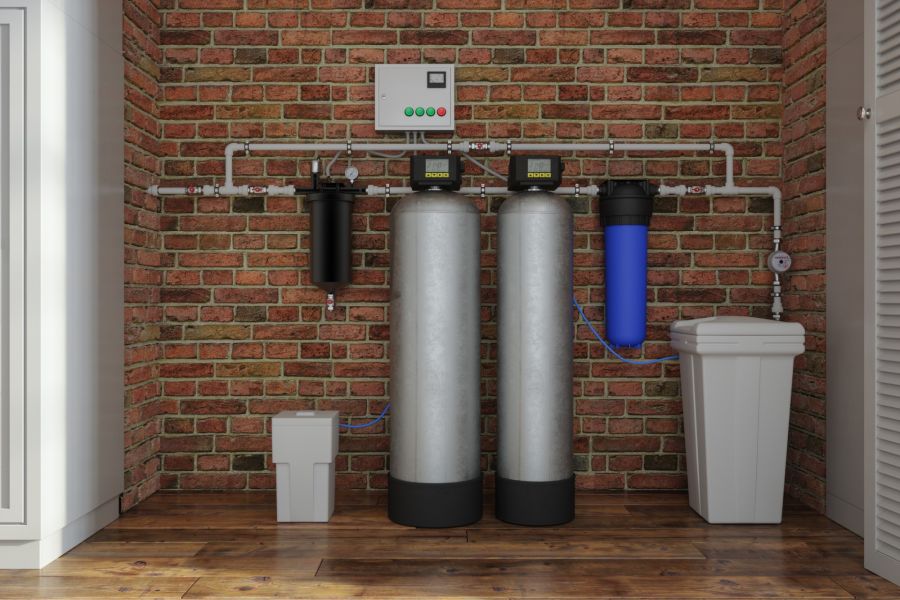
A whole-house water softener removes calcium and magnesium through ion exchange. This is the single most impactful upgrade for homes in our area.
For Contaminants: Whole-House Filtration
A multi-stage filtration system removes chlorine, chloramine, sediment, and many other contaminants from every faucet in your home.
For Drinking Water: Reverse Osmosis
An under-sink RO system produces the purest drinking water possible, removing up to 99% of all dissolved contaminants. This is the best solution for TDS, chromium-6, and disinfection byproducts.
Best Option: Combo System
Many homeowners in our service area choose a combination system -- water softener plus whole-house filtration, often paired with an RO system for drinking water. This addresses hardness, contaminants, and drinking water quality in one comprehensive solution.
Get Your Water Tested
Every home is different. Water quality varies by city, neighborhood, water source, and the age of your plumbing. The only way to know exactly what is in your water is to test it.
We offer a free, comprehensive water test for homes across our service area. Our technician will test your water on-site and explain the results in plain language -- no pressure, no obligation.
Schedule your free water test and find out exactly what is in your water today.