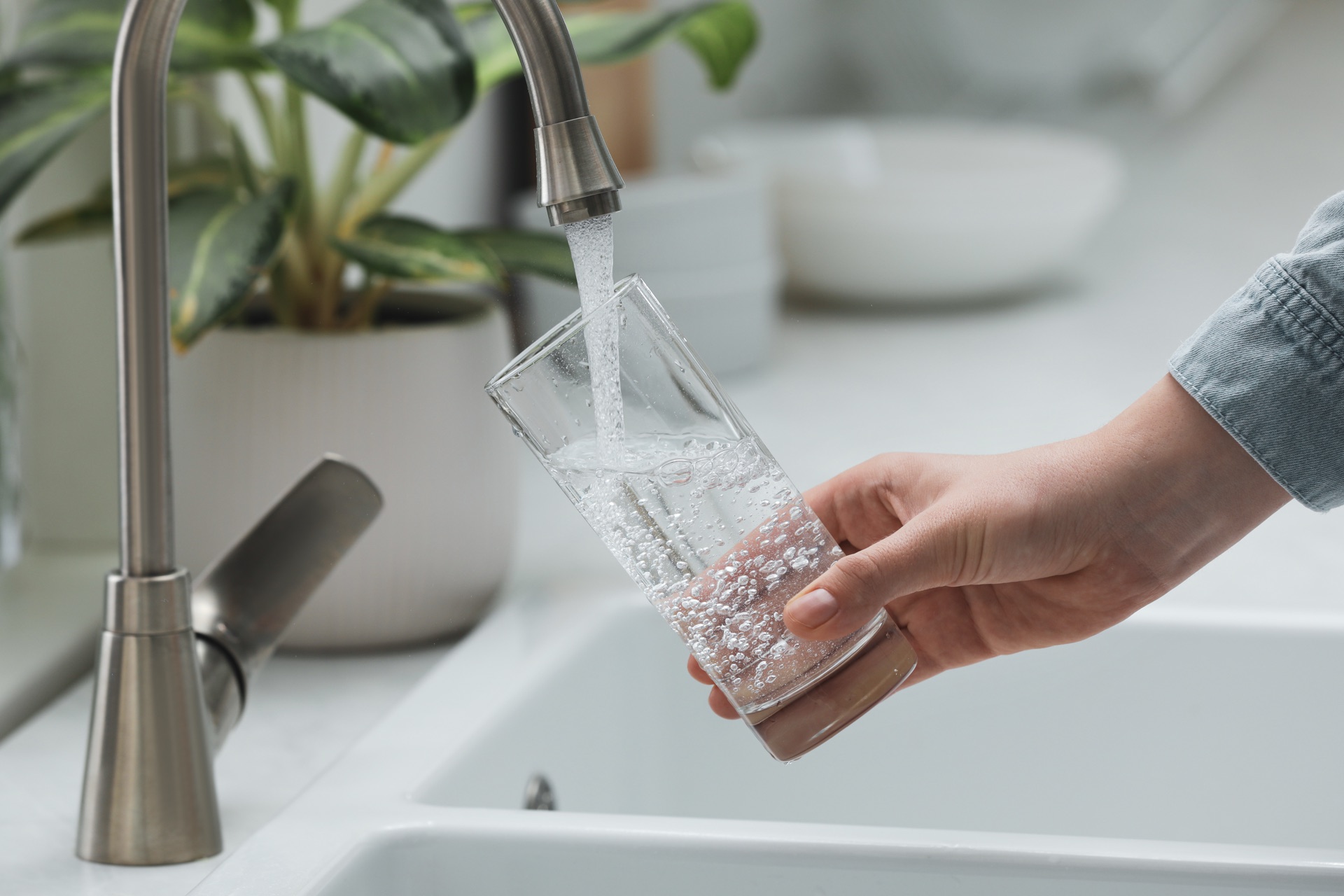
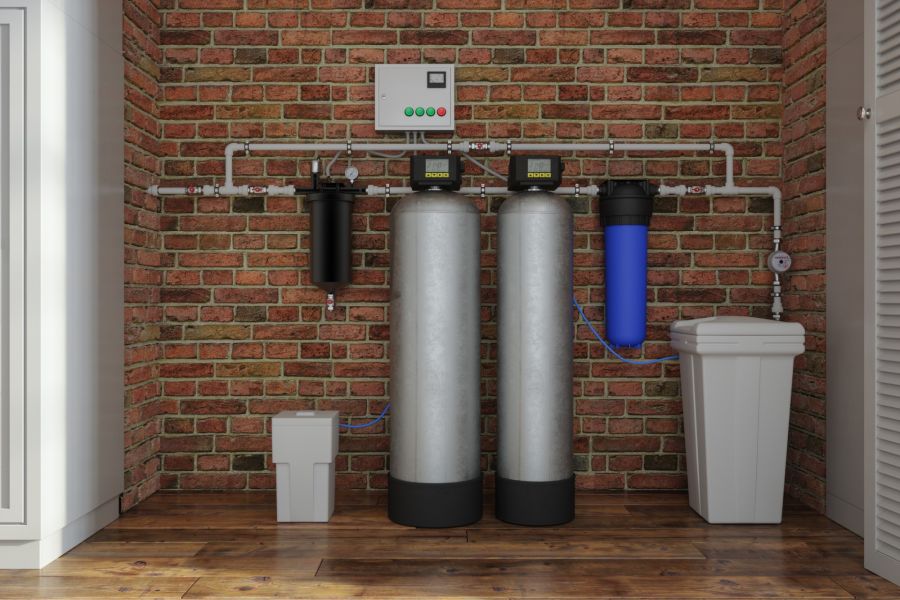
If your Phoenix tap water has suddenly started tasting salty or metallic, the cause is almost always one of three things: a softener pushing brine into your cold-water lines, a seasonal shift from Central Arizona Project surface water to higher-TDS groundwater, or a worn water-heater anode rod bleeding into the hot side. This guide walks through how to diagnose which one in 15 minutes.
What "Salty" Actually Means in Phoenix Water
Salty is the brain's shorthand for "lots of dissolved minerals on my tongue at once." In water-treatment language we measure that as TDS (total dissolved solids) and break it down by ion: sodium, chloride, calcium, magnesium, sulfate, and bicarbonate. Phoenix Water's source blend gives the region one of the highest baseline TDS readings of any major US city, averaging 500 to 700 ppm. The EPA Secondary MCL is 500 ppm.
When TDS jumps another 100 to 200 ppm because of a softener malfunction or source shift, the saltiness goes from "barely noticeable" to "I cannot drink this." That is usually the moment a homeowner Googles their way to this page. Read our Southwest water quality overview for the bigger picture on what is in Phoenix tap water before treatment.
Quick Diagnostic: 4 At-Home Tests
Before you call anyone, run these four checks. They take 15 minutes and tell you 80 percent of what you need to know.
1. Hot vs. cold test. Fill a glass from the cold tap, then a second glass after the hot has run 30 seconds. If only the hot tastes salty or metallic, your water heater is the source (corroding anode rod, scale flushing, or sediment). If both taste salty, the issue is upstream of the water heater.
2. Kitchen vs. outdoor hose bib test. Fill a glass from the kitchen tap, then taste water from an outdoor hose bib that is plumbed before the softener. If only the kitchen is salty, your softener is the cause. If both are salty, the issue is the incoming city or well water.
3. TDS meter test. A handheld TDS meter from any hardware store gives you a fast number. Phoenix homes should read 400 to 700 ppm at the cold tap. If you read 1,000+ ppm, something is wrong. If your softened side reads dramatically higher than the bypass side, the softener is leaking brine.
4. Visual brine-tank check. Open your softener's brine tank. The salt level should be at least one-third full, with brine (a clear salty puddle) at the bottom. If salt is bridging at the top and dry underneath, regeneration is broken. If salt is gone and the tank is half full of brine, the softener is over-regenerating.
Why Phoenix Water Tastes Salty in the First Place
Phoenix sits at the end of a long mineral pipeline. The Central Arizona Project delivers Colorado River water that picks up calcium, sulfate, and sodium across 336 miles of canal. Salt River Project surface water adds magnesium and bicarbonates. Groundwater from the Salt River and Verde aquifers contributes sodium and silica. The blend changes seasonally based on demand and reservoir levels.
According to the most recent Phoenix Water Services Department annual water quality report, system-wide averages run sodium 60 to 110 mg/L, chloride 60 to 130 mg/L, sulfate 130 to 280 mg/L, and TDS 500 to 700 ppm. Hardness averages 12 to 17 grains per gallon (210 to 290 mg/L as CaCO3). Some east Valley ZIPs in Mesa, Gilbert, and Chandler regularly read higher.
When August demand peaks and CAP deliveries get throttled, Phoenix Water shifts more groundwater into the blend. TDS spikes 50 to 150 ppm overnight, and homes that were borderline-noticeable on the salty-taste threshold cross it. That is why you can have a stable system for 7 years and then suddenly "taste a change" in late summer.
The Three Most Common Causes
Across Maricopa County, salty-tap complaints break down like this:
- Softener pushing brine into the supply (about 45 percent of calls). A stuck brine valve, clogged injector, or over-cycled regeneration program lets concentrated salt water flow into your home rather than down the drain. The kitchen test isolates this in under a minute.
- City source-blend shift (about 30 percent). No equipment failure. Phoenix Water moved more groundwater into your area's blend, and your cold tap legitimately got saltier. A TDS meter and a call to the utility confirm it.
- Water-heater anode rod corroding (about 15 percent). Phoenix's high-sulfate water eats magnesium anode rods fast. The corrosion product is sodium thiosulfate which tastes metallic and salty. The hot vs. cold test isolates this.
- Iron or sodium-rich well water (about 10 percent, only for homes on private wells in Cave Creek, Anthem, or outlying areas). Requires a well water test and usually a specialized iron filter plus softener.
Recommended Method
| Diagnostic Result | Likely Cause | Recommended Action |
|---|
| Salty hot only, cold tastes fine | Water heater anode rod | Replace anode with aluminum-zinc, flush tank |
| Salty kitchen, hose bib fine | Softener brine leak | Bypass softener, call for service |
| Salty everywhere, TDS 800+ ppm | City source shift or worn softener | Test, then reverse osmosis at the kitchen tap |
| Salty everywhere, on well water | High-sodium groundwater | Whole-home RO or blended bypass system |
| Salty + cloudy or rust-colored | Iron + sodium combination | Combo iron filter + softener + RO |
For most Phoenix homes the long-term fix is a properly sized softener for hardness plus an under-sink reverse osmosis system at the kitchen sink for drinking and cooking water. That combination handles scale and taste at the same time. Our combo systems overview walks through how the two work together.
When DIY Makes Sense (and When It Does Not)
Some of these fixes are weekend-doable. Others are not.
DIY makes sense when:
- You can shut off the main and bypass the softener with the bypass valve already on the unit
- You are comfortable using a TDS meter and reading a brine-tank gauge
- You can vacuum a brine tank and re-prime the brine line
- You are willing to flush a water heater (drain valve open, cold supply on, run until clear)
Call a professional if:
- The softener is more than 10 years old and the control valve is failing (replace, do not patch)
- You are on a private well and salty taste appeared after a pump replacement or aquifer drop
- You suspect a backflow contamination event (smells off, water turned brown then salty)
- Your home has a slab water main and you cannot locate the shutoff
- Sodium is a medical concern for someone in the household
Our free water test covers hardness, pH and mineral content, TDS, chlorine levels, and iron and manganese, and ends with recommendations based on your results. No sales pressure.
What Our Service Visit Looks Like
For salty-water complaints we run a fixed diagnostic sequence.
- Site walk and water test at 3 fixtures (cold kitchen, cold bathroom, outdoor bypass).
- Softener inspection: brine tank salt level, brine line clarity, injector cleanliness, valve programming.
- Water heater drain check and anode rod inspection if hot-side complaints.
- TDS reading before and after the softener (this is the critical number).
- Recommendations based on your results, covering repair, upgrade, or whole-home rebuild options.
The diagnostic visit is free if you are within our service area. We do not charge to diagnose, only to fix.
Maintenance Tips to Keep Phoenix Water Drinkable
- Check your softener brine tank every two weeks during summer. Phoenix heat speeds salt bridging.
- Flush your water heater annually. Phoenix sediment fills the tank bottom faster than national averages.
- Replace the water-heater anode rod every 4 to 6 years with an aluminum-zinc rod (better than magnesium for Phoenix water).
- Replace RO membranes every 24 months if you have one (Phoenix water loads them faster than rated).
- After any city main repair in your neighborhood, run the cold tap at the lowest fixture for 5 minutes before drinking.
- Subscribe to your utility's water quality alerts. Phoenix Water sends boil notices and source-blend changes via email.
If you also have hard-water symptoms (white spots, scale, stiff laundry), our 7 hard water signs guide covers what else to look for. For homes with multiple issues, see water softener maintenance to keep your softener running on Phoenix's tough water.
Get a Free Water Test in Phoenix
You cannot fix what you have not measured. Our free in-home water test in the Phoenix metro covers hardness, pH and mineral content, TDS, chlorine levels, and iron and manganese, with on-site testing and recommendations based on your results. We serve Phoenix, Scottsdale, Mesa, Chandler, Gilbert, Tempe, Glendale, and Peoria.
Call (949) 873-1129 or schedule a free water test online. We will work around your schedule.