A free in home water test gives you a fast, accurate reading of the minerals and chemicals that shape your daily water quality. When a certified water treatment specialist visits your home, they measure hardness in grains per gallon, total dissolved solids in parts per million, chlorine or chloramine concentration, and pH level. These four measurements tell you whether your water is hard enough to damage appliances, whether your disinfectant level is high enough to taste or smell, and whether your overall dissolved mineral load is creating problems in your home. A free test does not replace a state certified lab analysis for lead, PFAS, nitrates, bacteria, or other health contaminants. For those concerns, you need a laboratory panel costing 50 to 300 dollars depending on what is tested. But as a starting point for understanding your water and sizing a treatment system, a free professional in home test is the fastest and most practical option available. Call (949) 873-1129 to schedule yours.
What Does a Free In-Home Water Test Check For?
A free in home water test checks four key parameters that determine whether your household needs water treatment equipment. The technician tests your water on site and gives you readings for hardness, total dissolved solids, chlorine, and pH.
Hardness in grains per gallon. Hardness above 7 gpg is classified as hard. Above 14 gpg is very hard. Most Orange County homes test between 14 and 19 gpg. Scottsdale and Phoenix area homes typically run 13 to 16 gpg. Hard water leaves white scale deposits on fixtures, glass, and appliances, reduces soap lather, and shortens water heater life significantly.
Total dissolved solids in parts per million. TDS measures the combined concentration of all minerals dissolved in your water. The EPA secondary standard for taste and aesthetics places 500 ppm as the upper limit for palatability. High TDS water can taste flat, minerally, or slightly salty.
Chlorine or chloramine concentration. Most municipal utilities add one or the other as a disinfectant. Knowing which one your utility uses matters for filter selection: chloramine requires catalytic carbon media for removal, while chlorine breaks down readily on standard activated carbon.
pH level. A reading below 7 is acidic. Above 7 is alkaline. Most city water sits between 7.0 and 8.5. Water on the lower end of that range can be more corrosive to copper pipes and fixtures and can leave blue green staining around drains and fixtures.
What a free test does NOT cover: lead, PFAS (per and polyfluoroalkyl substances), nitrates, bacteria, arsenic, heavy metals, or other health critical contaminants. For those, you need a state certified laboratory. A free in home test is a diagnostic tool for treatment sizing purposes, not a regulatory safety certification.
How Is a Free Water Test Different from a Lab Water Test?
A free in home water test and a certified laboratory water test serve different purposes, and knowing the difference helps you decide which one you need first.
A free in home test is done on the spot with portable digital instruments. It delivers immediate results on the four parameters that matter most for treatment sizing: hardness, TDS, disinfectant level, and pH. The cost is zero. The technician then goes over your results and gives you recommendations based on your water. You can book a free water test in Phoenix or a free water test in Irvine, and we will work around your schedule.
A lab water test involves collecting a water sample and shipping it or dropping it off at a certified testing facility. A basic panel typically costs 50 to 150 dollars and covers 20 to 40 parameters. A comprehensive panel covering PFAS, metals, bacteria, nitrates, and volatile organic compounds can run 200 to 300 dollars or more. Results take three to ten business days.
State certified labs are required for results that are legally admissible, such as for real estate transactions, well compliance testing, or regulatory documentation. Look for labs that are NSF certified or hold state certification in your state.
The practical approach for most homeowners is to start with a free in home test. If the results reveal concerns that extend beyond hardness and TDS, or if your home relies on a private well, that is when you escalate to a certified lab panel. You can also request a referral from your local health department or call the EPA Safe Drinking Water Hotline.
Is a Free Water Test Accurate?
A free in home water test is accurate for what it measures, provided the instruments are properly calibrated. Professional water treatment companies calibrate their meters regularly against certified reference standards. For hardness, TDS, chlorine, and pH, digital meters deliver results within a small margin that is more than sufficient for treatment system sizing.
That said, accuracy has limits beyond the four parameters. A digital TDS meter cannot tell you whether your dissolved solids are sodium, calcium, magnesium, nitrate, or PFAS. It reads the total conductivity of the water and converts it to an estimated ppm figure. So a high TDS reading tells you there is something dissolved in your water but does not identify what it is.
For hardness specifically, digital meters that use a reagent drop test method are highly accurate. Many technicians carry both a digital meter and a drop test kit as a cross check. When the two methods agree, you can be confident in the reading.
For chlorine and chloramine, colorimetric test strips give a reliable indication of concentration within the ranges relevant for treatment decisions.
The honest summary: a free in home test is diagnostic, not regulatory. It tells you what your water quality is for treatment sizing purposes. For health-based decisions involving lead, PFAS, bacteria, or nitrates, use an EPA certified lab. See the EPA guidance on private wells for well water testing recommendations and the EPA drinking water resources for municipal water testing guidance.
Ready to see what your tap water actually contains? Schedule a free water test in Anaheim Hills or call (949) 873-1129. We will work around your schedule.
Who Offers Free Water Testing Near Me?
Several sources offer free or low-cost water testing, each with different scope and purpose.
Water treatment companies. This is the most practical starting point for most homeowners. Companies like Purest Water Solutions send trained technicians to your home at no charge. The test gives you a full readout of the parameters that affect treatment system selection. There is no obligation to purchase anything. We serve Orange County, Phoenix, Scottsdale, Temecula, and surrounding areas.
Book your appointment: free water test in Anaheim, free water test in Riverside, or free water test in Temecula.
Your water utility. Some municipal utilities offer limited water testing by request, particularly for basic parameters like hardness and pH. Contact your utility's customer service line to ask. Results may take several weeks to receive.
State health departments. Many state health departments maintain lists of certified labs and occasionally offer subsidized testing programs, particularly for private well owners and low-income households.
Private certified labs. If you want a full panel, search for NSF certified or state certified labs in your area. Labs typically allow you to drop off a sample or request a collection kit. Results cost 50 to 300 dollars depending on the panel scope.
For a well water situation, the EPA recommends annual testing for bacteria, nitrates, and other contaminants. The EPA Safe Drinking Water Hotline (1-800-426-4791) can connect you with certified labs in your area at no cost for the referral.
For municipal water customers, a free in home test from a water treatment company is almost always the fastest and most practical first step.
What Happens After a Free Water Test?
After the technician finishes testing, they walk you through your results in real time. The readings cover your hardness in gpg, TDS in ppm, chlorine level, and pH. Most technicians will also do a brief walkthrough of your water-using appliances if you request it, looking for visible scale on fixtures or the hot water heater.
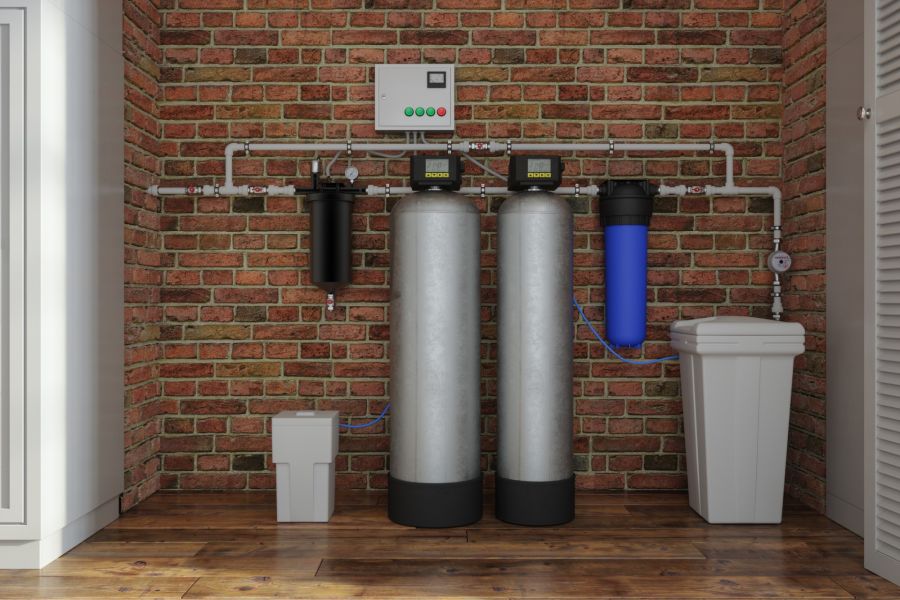
Based on the readings, the technician can recommend the appropriate system type and size for your home. For example, a hardness reading of 17 gpg in a 2,500 square foot home with four occupants would typically call for a water softener sized at 40,000 to 48,000 grain capacity. A high chloramine level would indicate the need for a catalytic carbon filter rather than a standard activated carbon filter.
You are not required to make any decisions on the day of the test. Reputable companies provide you with the results and a quote and give you time to consider your options. Be cautious of any company that uses high-pressure tactics during a free test visit.
After the test, you can reference the orange county hard water guide to understand what your specific readings mean for your home. If you want to compare a free test result to a full lab panel, the anaheim hills water quality guide covers local water characteristics in detail.
If the technician identifies readings that suggest health contaminants may be present, they should recommend a certified lab test rather than propose a filtration system as a solution. Any technician who proposes to sell you a filtration system as a remedy for unverified lead or bacteria without recommending a lab test first is not operating in your best interest.
What Should I Do Before the Water Test Appointment?
Preparing your home for a water test takes about five minutes and significantly improves the accuracy of your results.
Run the cold tap for two full minutes before the technician arrives. This is the most important step. Standing water in your pipes has had time to absorb minerals from the pipe walls and does not represent your actual supply water. Running the tap for two minutes flushes that standing water and gives the technician a sample that reflects what your utility is actually delivering. Use your kitchen cold water tap, not the hot tap.
Test at the kitchen cold tap only. The kitchen cold water line is your best sampling point because it is the water you drink and cook with, it is typically a direct supply line with minimal time in distribution pipes, and it avoids the hot water heater, which introduces additional scale.
Have your last utility bill ready. The technician may ask for your account number to look up your utility's current water quality report. Municipal utilities publish annual Consumer Confidence Reports that list the average hardness, TDS, disinfectant type, and other parameters for your supply zone. Your bill's account information helps cross-reference this data against your in-home reading.
Note any issues you have observed. Before the technician arrives, make a brief mental list: Is there scale buildup on your showerhead or faucet aerators? Do your glasses come out of the dishwasher spotty? Is there a chlorine taste or smell? Does your water have any discoloration? These observations help the technician contextualize your test results and identify whether a secondary issue may be present that the basic panel might miss.
When Should I Pay for a Full Lab Water Test Instead?
A free in home water test is the right starting point for most homeowners, but certain situations call for a certified laboratory panel instead.
Private well water. If your home uses a private well, you do not have a municipal utility monitoring your supply. The EPA recommends that well owners test annually for bacteria, nitrates, pH, and any contaminants common to their local geology. Annually at minimum, and any time you notice a change in taste, smell, or appearance. See EPA guidance on private wells for the complete recommended testing protocol.
Infants in the household. Nitrates are particularly dangerous for infants under six months of age and can cause a condition called methemoglobinemia. If you have or are expecting an infant, nitrate testing from a certified lab is a sensible precaution regardless of whether you are on city water or a well.
Unexplained taste, smell, or discoloration. If your water has an unexplained odor, unusual color, or taste that is not consistent with the normal chlorine smell from city water, a full lab panel is warranted. These symptoms can indicate bacterial contamination, PFAS, or other issues that a basic meter test cannot detect.
Real estate transactions. If you are buying or selling a home with a private well, most lenders require a certified lab test as part of due diligence. The results must come from a state certified lab to be legally admissible.
Post-event testing. After a flood, infrastructure incident, or nearby chemical spill, a certified lab test gives you the documentation you need to verify your water is safe.
For any of these situations, call the EPA Safe Drinking Water Hotline at 1-800-426-4791 for a referral to a certified lab in your area, or contact your county health department directly. The hotline is free and available Monday through Friday.
For straightforward municipal water quality questions or to size a treatment system, start with a free water test in Anaheim Hills or call (949) 873-1129. We will give you your results on the spot and help you understand exactly what your water needs.