One of the most common questions homeowners ask is whether they need a water softener, a water filter, or both. The answer depends entirely on what is in your water. According to the U.S. Geological Survey (2024), 85% of American homes have hard water, but hardness is just one of many potential water quality issues.
The Core Difference
A water softener removes hardness minerals (calcium and magnesium) through ion exchange. It solves scale buildup, soap scum, and appliance damage. It does not remove contaminants like chlorine, lead, or bacteria.
A water filter removes contaminants — chlorine, sediment, heavy metals, VOCs, and other dissolved substances. It improves taste, odor, and safety. It does not address hardness.
Many Southwest homeowners need both systems working together.
Side-by-Side Comparison
| Feature | Water Softener | Whole-House Filter | Combo System |
|---|
| Removes hardness | Yes | No | Yes |
| Removes chlorine | No | Yes | Yes |
| Removes lead/heavy metals | No | Yes (carbon + KDF) | Yes |
| Removes sediment | No | Yes | Yes |
| Prevents scale buildup | Yes | No | Yes |
| Improves taste/odor | Minimal | Yes | Yes |
| Protects appliances | Yes | Partial | Yes |
| Salt required | Yes (ion exchange) | No | Partial |
| Typical cost installed | $1,200-$3,500 | $1,500-$4,000 | $3,000-$6,000 |
| Annual maintenance | $100-$200 (salt) | $100-$200 (filters) | $200-$350 |
When You Need a Water Softener
A water softener is the right choice when your primary issue is hard water. Signs include:
- White scale deposits on faucets and showerheads
- Spots on dishes and glassware after washing
- Stiff, scratchy laundry
- Dry skin and dull hair after showering
- Shortened water heater lifespan (the U.S. Department of Energy estimates hard water reduces water heater efficiency by up to 29%)
Water hardness is measured in grains per gallon (GPG). Water above 7 GPG is considered hard and benefits from softening.
When You Need a Water Filter
A water filter is the right choice when contaminants affect taste, safety, or odor:
- Chlorine taste or smell from municipal treatment
- Sediment or discoloration in water
- Concerns about lead, PFAS, or other contaminants
- Well water with iron, sulfur, or bacteria
- A desire for cleaner drinking water without buying bottles
The Environmental Working Group (EWG) maintains a tap water database showing contaminant levels by zip code. Checking your local report is a good starting point.
When You Need Both
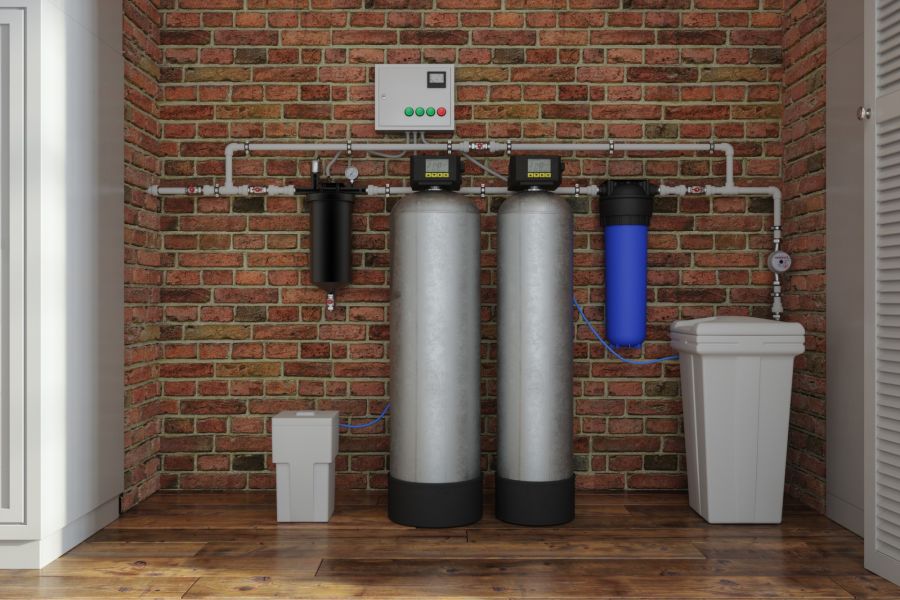
Most homes in the Southwest benefit from a combo system. Hard water and chlorine treatment go hand in hand — municipal water is almost always both hard and chlorinated. A combination system addresses both issues at the point of entry, protecting the entire home.
The most cost-effective approach is a single integrated system rather than two separate units. Combo systems share a single bypass valve, drain line, and installation footprint.
Frequently Asked Questions
Can a water filter remove hardness?
No. Standard carbon and sediment filters cannot remove dissolved calcium and magnesium. Only ion exchange (softening) or template-assisted crystallization (TAC) can address hardness. Some marketing materials claim filters "condition" hard water, but this is not the same as true softening.
Does softened water taste salty?
No. The amount of sodium added by ion exchange is minimal — roughly 20-40 mg per 8-ounce glass, depending on original hardness. This is less sodium than a slice of bread. Homeowners on sodium-restricted diets can use potassium chloride instead of sodium chloride as the regenerant.
How do I know what is in my water?
A professional water test is the most reliable method. Purest Water Solutions offers free in-home water testing across our service area. The test measures hardness, TDS, pH, chlorine, iron, and common contaminants with results explained on the spot.